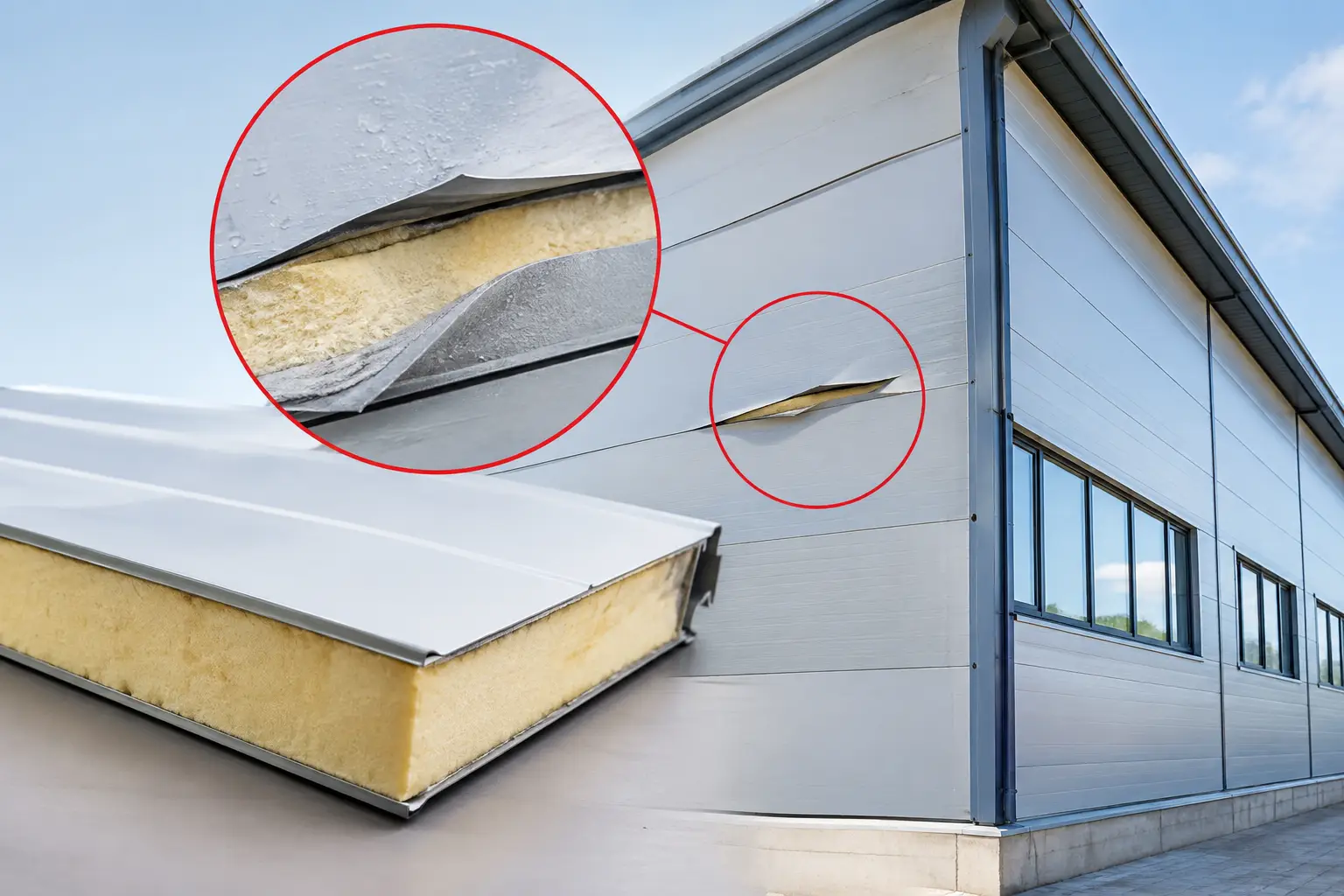
A sandwich panel can look perfectly acceptable from the outside while the bond between its metal facing and insulated core is beginning to fail. For contractors, owners, and project managers, understanding what causes sandwich panel delamination is essential because a small unbonded area can spread, affect weather resistance, and lead to avoidable repair work.
Delamination is not usually the result of one visible event. It is often the combined effect of material selection, factory bond quality, handling, installation, and site conditions. The cause must be identified before repairs or replacement are planned, particularly on roofs, external walls, cold stores, and industrial buildings where panel performance matters over many years.
What Causes Sandwich Panel Delamination?
Sandwich panel delamination occurs when the bond between one or both metal skins and the insulation core loses strength. PU and PIR panels depend on this bonded assembly to work as a single structural element. Once the facing separates from the core, the panel may become less stable, more vulnerable to water entry, and more likely to show visible distortion.
The most common causes are inadequate adhesion, moisture exposure, repeated thermal movement, physical damage, poor installation practices, and unsuitable panel selection for the application. In many cases, early warning signs are subtle: localized bulging, a hollow sound when tapped, rippling of the metal skin, loose edges, or unexplained movement around fasteners.
The right diagnosis depends on where the separation appears. A panel that delaminates close to roof fasteners may have a different issue from a cold room wall panel showing separation near joints or floor connections.
Weak Bonding During Panel Production
The bond line between the insulated core and metal facings is fundamental to panel quality. If the adhesive system, foam formulation, curing conditions, or surface preparation is not properly controlled during production, the finished panel may have areas of reduced bond strength.
Contamination on the inner face of the steel sheet can also interfere with adhesion. Oil, dust, moisture, or incompatible coatings may prevent a consistent bond from forming. This is why project teams should source panels from suppliers that can provide appropriate product information and support selection based on the intended use.
A weak factory bond does not always become visible immediately. It may remain unnoticed until the panel experiences heat, wind pressure, moisture, or handling stress. For this reason, visual inspection alone is not always enough when panels are delivered. Checking panel condition, edge profiles, protective film, packing, and any signs of damage before installation provides a useful first control point.
Heat, Sun Exposure, and Thermal Movement
Metal skins expand and contract as temperatures change. On roofs and dark-colored cladding, solar heat can create substantial temperature differences between the external sheet, internal sheet, and insulation core. The materials are designed to accommodate normal movement, but repeated cycling can place stress on an already weak bond.
This risk is higher where panels are exposed to intense sunlight, where long panel lengths are used, or where fixing details restrict movement. In hot climates such as the UAE, roof orientation, coating color, panel profile, ventilation arrangements, and the expected service temperature should be considered during design and procurement.
Thermal movement alone should not cause a suitable, correctly installed panel to delaminate. However, it can reveal a weakness created by poor bonding, site damage, or excessive loading. Localized bubbling or skin lifting after prolonged hot weather should be investigated rather than covered with sealant or flashing without finding the source.
Moisture Entry and Condensation
Water is one of the most damaging contributors to delamination. It can enter through damaged joints, failed sealant, poorly formed flashings, penetrations, or punctures in the metal face. Once moisture reaches the panel edge or bond line, it may reduce adhesion and create corrosion risk on the concealed metal surface.
Condensation can be equally problematic. Cold rooms, refrigerated spaces, food-processing areas, and buildings with high internal humidity need carefully designed vapor control and sealed panel joints. If warm, moist air reaches a cold surface within or behind the panel assembly, condensation may form over time. The result can be damp insulation edges, deterioration at joints, and separation between the facing and core.
Roof penetrations require particular attention. Pipes, ducts, skylights, and service supports should use compatible flashing and sealing details. A small opening at a penetration may admit water repeatedly, even if there is no obvious internal leak during a brief inspection.
Installation Damage and Incorrect Fastening
Sandwich panels are strong when their faces and core remain bonded, but they can be damaged by poor site handling. Dragging panels across each other, lifting them without suitable support, walking on unsupported roof areas, or stacking them incorrectly can introduce stress before installation begins.
Overtightening fasteners is another common problem. A fastener compressed too aggressively can deform the outer skin, damage the washer, and create a point where water collects or enters. Undertightening can leave the panel insufficiently secured against wind loads and movement. Fastener type, spacing, support alignment, and installation torque should follow the panel system requirements.
Incorrect support spacing can also cause excessive deflection. When a panel spans farther than intended, the metal facings and core are subjected to repeated bending under maintenance loads, wind, or accumulated water. This may not cause immediate delamination, but it increases the chance of fatigue and localized separation over time.
Panel joints deserve the same care as the panel face. Misaligned side laps, damaged joint seals, missing sealant, and poorly installed flashings can allow water and air to bypass the intended weather barrier. A well-specified panel cannot compensate for careless joint work.
Impact Damage, Loading, and Site Modifications
A dent in the visible face of a sandwich panel is not always only cosmetic. A sharp impact from lifting equipment, falling tools, or unsecured materials can fracture the bond beneath the skin without creating a large hole. The affected area may later lift or ripple as the panel heats and cools.
Roof panels are especially vulnerable when contractors use them as work platforms without proper load distribution. Temporary materials, foot traffic, equipment, and maintenance access should be managed according to the roof design. Panels should not be assumed to support concentrated loads simply because they are installed over a large roof area.
Unauthorized site modifications can create similar problems. Cutting openings, adding heavy signs, attaching pipe supports, or fixing equipment directly through panels may alter drainage, introduce leaks, or apply loads that were not included in the original design. Any modification should be reviewed against the panel type, support structure, and weatherproofing detail.
How to Prevent Sandwich Panel Delamination
Prevention starts before the order is placed. Select the panel type, core, thickness, facing, coating, and profile based on the building's use and exposure. A warehouse, a cold store, and a high-humidity production area have different insulation, joint-sealing, and vapor-control demands.
During procurement, confirm that the panel system is appropriate for expected spans, loading conditions, fire requirements, and operating temperatures. Do not choose by thickness or price alone. The required fixing accessories, flashings, closures, sealants, and gutters should be considered as part of the complete envelope, not as separate afterthoughts.
On site, protect panels from standing water, direct ground contact, and unnecessary handling. Store packs on level bearers with adequate slope for drainage, and keep them covered while allowing moisture to escape. Inspect every panel before installation, especially edges and joint areas where damage can be hidden by protective film.
Installation crews should follow the approved layout, support spacing, fastener pattern, and joint-sealing procedure. Regular checks during installation are more effective and less costly than trying to correct widespread defects after the building is closed in.
What to Do When Delamination Is Suspected
Do not assume every surface ripple is delamination. Thin metal facings can show visual waviness from reflected light, thermal effects, or minor local distortion. A qualified inspection should distinguish between cosmetic appearance, isolated damage, moisture-related failure, and a wider bonding issue.
Start by recording the panel location, affected area, date noticed, weather exposure, nearby penetrations, and any history of impact or leaks. Check fasteners, laps, flashings, gutters, and internal condensation signs. Avoid drilling, cutting, or injecting materials into the panel until the cause is understood, as this can worsen water entry or complicate assessment.
Small localized damage may sometimes be addressed through a suitable repair detail, depending on the panel condition and location. Where separation is extensive, where water has entered the panel, or where roof and wall integrity is affected, replacement of the affected panels may be the more reliable solution.
For projects that require dependable panel selection and compatible roofing and cladding accessories, MetalSpan can help contractors and procurement teams match materials to the actual conditions of the building. Careful specification, protected handling, and disciplined installation give sandwich panels the best chance to perform as intended long after handover.