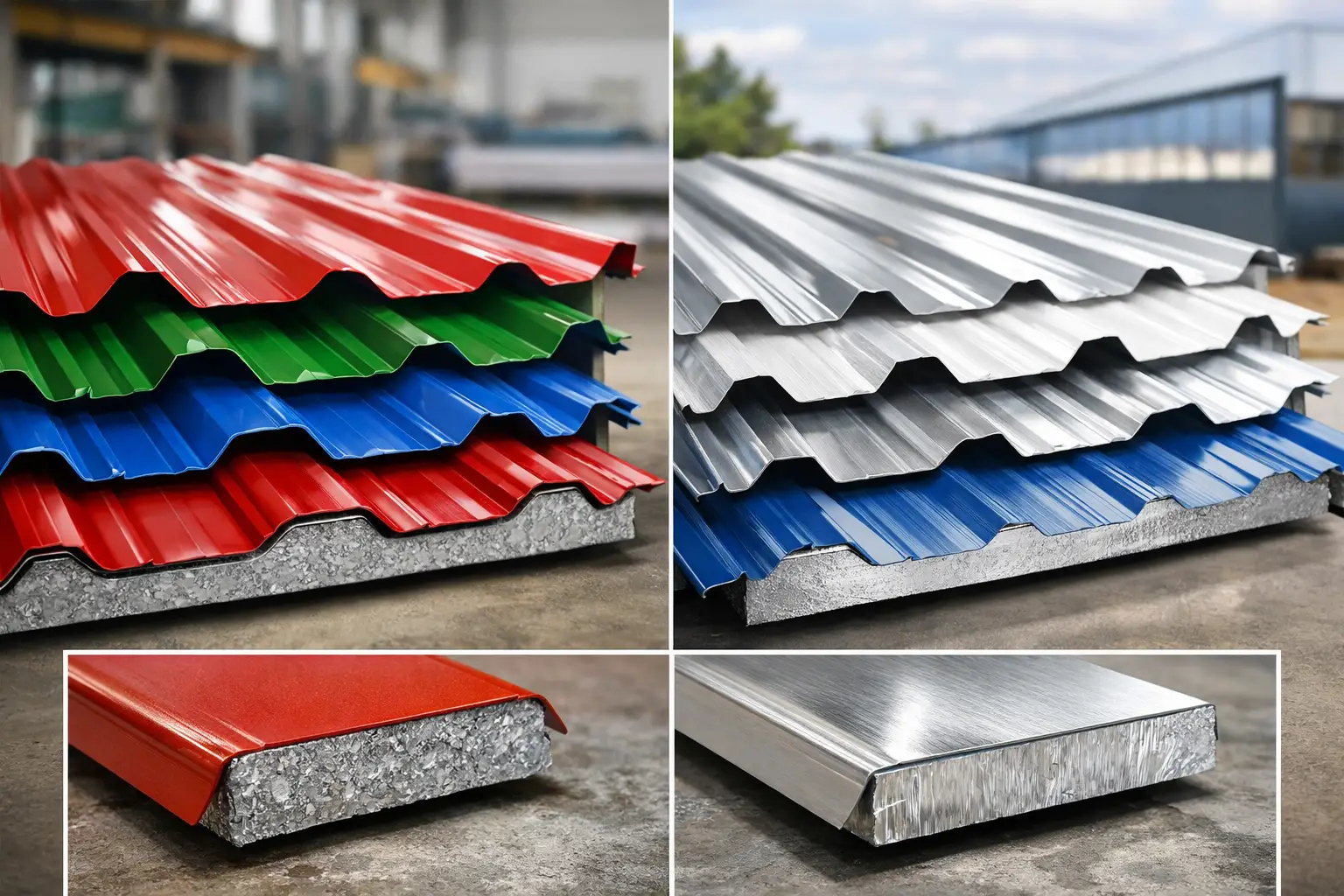
A coated sheet can look correct at delivery and still be the wrong choice for the building. In the UAE, intense sun, airborne dust, humidity, coastal salt exposure, and demanding construction schedules make the substrate beneath the paint as relevant as the visible finish. The decision between PPGI versus PPAL coated sheets affects durability expectations, detailing, project cost, and long-term maintenance planning.
PPGI and PPAL are both widely used for roofing, wall cladding, flashings, and fabricated building components. They can be supplied in a range of colors, thicknesses, profiles, and coating systems. However, they do not perform in exactly the same way because the base metal is different. Selecting the right material starts with understanding that difference, then matching it to the site, design, and budget.
PPGI Versus PPAL Coated Sheets: The Basic Difference
PPGI means prepainted galvanized iron, a common market term for prepainted galvanized steel. The steel sheet receives a protective zinc coating before paint is applied through a controlled coil-coating process. The completed sheet typically includes surface treatment, primer, a topcoat on the exposed face, and a backing coat on the reverse side.
PPAL means prepainted aluminum. Its base metal is aluminum rather than galvanized steel, with a factory-applied paint system that provides the required color and surface finish. Aluminum naturally forms an oxide layer that contributes to its corrosion resistance, while the paint layer adds appearance and further protection.
Both options are practical construction materials. The choice is not simply a matter of which is better. A warehouse in an inland industrial area, a villa canopy near the coast, and a fabrication project requiring complex flashings may each justify a different specification.
How the Base Metal Changes Performance
Corrosion resistance and site exposure
The primary reason many buyers compare these materials is corrosion resistance. PPAL is often considered for projects where moisture, salinity, or a corrosive atmosphere is a major concern. Aluminum does not rust in the same manner as steel, which can make it an appropriate option for selected coastal and exposed applications.
PPGI relies on its zinc coating and paint system to protect the steel beneath it. When correctly specified for the environment and installed with care, it is a dependable solution for many roofing and wall-cladding applications. The coating grade, zinc mass, paint type, sheet thickness, and quality of installation all influence the outcome.
Site conditions matter more than broad assumptions. A project close to the Arabian Gulf, an area exposed to industrial emissions, or a building with frequent condensation requires a more careful review than a dry, inland structure. Material selection should also account for how water drains, where dust accumulates, and whether cut edges or penetrations will remain exposed.
Strength, dent resistance, and handling
PPGI generally offers higher stiffness than PPAL at comparable thicknesses because steel is stiffer than aluminum. This can be valuable for profiled sheets, longer spans within the approved design, and applications where handling damage is a concern. It also gives fabricators a familiar material for forming standard roof and wall accessories.
PPAL is lighter in weight, which can support handling and reduce dead load in some applications. At the same time, aluminum can be more susceptible to denting if the sheet, profile, or support spacing is not selected carefully. This does not make PPAL unsuitable for roofing or cladding. It means the profile geometry, thickness, fixing arrangement, and expected site traffic need to be considered as a complete system.
Contractors should avoid judging either material by nominal thickness alone. A thinner sheet with an unsuitable profile or inadequate support spacing can create issues regardless of the metal type. The final selection should be coordinated with the building design and the intended application.
Thermal movement in UAE conditions
Metal sheets expand and contract as temperatures change. Aluminum has a higher rate of thermal expansion than steel, so PPAL sheets require particular attention to sheet length, fixing details, overlaps, and allowance for movement. This is especially relevant on large roof areas exposed to direct sunlight.
PPGI also moves with temperature, but typically less than aluminum. For either material, correct fastener placement, appropriate washers, properly designed flashings, and compatible sealants help the roof or cladding system accommodate normal movement without stressing the sheet or opening joints.
This is one area where material supply and installation planning should work together. A good sheet selection can be compromised by details that do not suit the expected movement of the installed material.
Finish, Color, and Coating Selection
The visible paint finish is often the first consideration for architects and building owners. Both PPGI and PPAL can provide clean, consistent color for industrial, commercial, warehouse, prefab, and residential applications. Color alone, however, should not decide the specification.
The coating system should suit the location and expected exposure. Paint type, coating thickness, gloss level, and surface finish can affect color retention, chalking behavior, scratch resistance, and general appearance over time. Light colors may be preferred where roof heat gain and visual cleanliness are priorities, while darker colors may suit an architectural design but can show dust and heat effects differently.
For projects requiring roof sheets, wall cladding, gutters, ridge caps, or custom flashings in matching shades, it is useful to coordinate the material schedule early. Differences in substrate, paint batch, gloss, and forming direction can affect how adjacent components appear under sunlight. Requesting clear material details before procurement helps avoid mismatched finishes during installation.
Cost: Looking Beyond the Sheet Price
PPGI is commonly selected where a cost-conscious, strong, and versatile coated steel solution is required. It is widely used across warehouses, factories, workshops, commercial structures, and standard roofing and cladding projects. Availability in common profiles and accessories can also simplify procurement.
PPAL may have a higher initial material cost depending on thickness, finish, market conditions, and required quantity. That cost can be justified where the exposure environment, weight requirement, or project specification favors aluminum. However, it should be evaluated as part of the full installed system rather than as an isolated price per sheet.
A useful comparison includes sheet thickness, coating specification, profile, support requirements, fasteners, flashings, wastage, transport, fabrication needs, and anticipated maintenance. Comparing only two quotations with different base-metal thicknesses or paint systems can lead to a misleading result.
Installation Details That Affect Both Materials
Even a suitable coated sheet can underperform when detailing is overlooked. Roofing and cladding contractors should pay close attention to cutting practices, fastener selection, drainage, overlaps, and the interface between different metals.
Avoid leaving metal swarf on completed sheets after drilling or cutting. These particles can stain the surface and contribute to localized corrosion. Cut edges should be minimized where possible and protected where required by the project detail. Roof slopes and gutters should be designed to prevent standing water and trapped debris.
Material compatibility is also important. When dissimilar metals remain in contact in the presence of moisture, galvanic corrosion can occur. Fasteners, washers, flashings, drainage components, and adjoining structural elements should therefore be selected as compatible components. This is particularly relevant in coastal projects and areas where condensation may occur.
For profiled roofing, installers should also follow the intended direction of side laps and provide proper sealing where the roof pitch or weather exposure requires it. A coated sheet is one part of the weathering system, not the whole system.
Which Coated Sheet Fits Your Project?
PPGI is often a practical choice for standard roofing, wall cladding, fabricated flashings, and industrial building applications where strength, availability, and controlled project cost are key priorities. A suitable zinc coating and paint system should be selected based on the actual exposure conditions.
PPAL is worth considering where low weight and enhanced resistance to certain corrosive environments are central to the specification. It is particularly relevant when coastal exposure, material movement, and dent resistance have been reviewed in the design rather than treated as afterthoughts.
For either option, the most useful procurement request states the intended use, location, profile, thickness, color, coating requirement, quantity, and any fabrication needs. This allows the supplier to provide a more relevant material recommendation instead of a generic sheet quote.
MetalSpan Trading supports contractors, fabricators, and project teams with coated sheets and related roofing and cladding materials suited to project-specific requirements across the UAE. Before finalizing your order, share the site conditions and complete component schedule with the technical team. That early conversation can help ensure the sheet, accessories, and installation details are working toward the same result: a finished building envelope that performs as intended.