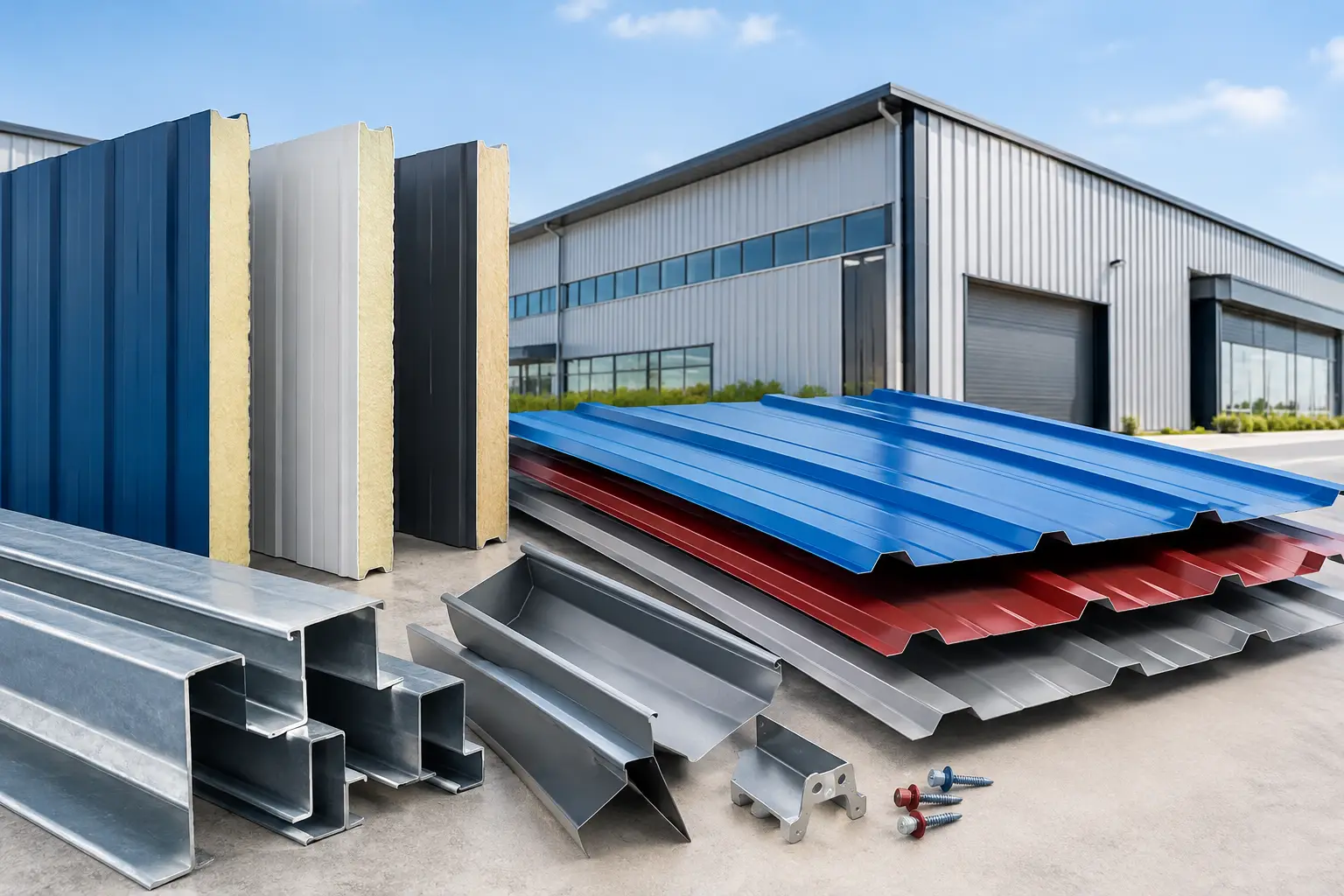
A roof sheet can look acceptable on delivery and still create avoidable problems years later. In the UAE, intense sun, airborne dust, coastal humidity, and fast-paced construction schedules make material selection more than a price comparison. This PPGI roofing review focuses on what contractors, project managers, and procurement teams should assess before ordering coated steel roofing sheets for warehouses, factories, workshops, prefab units, and commercial buildings.
PPGI, or pre-painted galvanized iron, is galvanized steel with a factory-applied paint coating. It is widely used because it combines the corrosion resistance of zinc coating with a finished surface that can reduce site painting work. The right product can provide a practical, clean-looking roof system. The wrong specification, however, may lead to premature fading, corrosion around cut edges, oil canning concerns, or installation difficulties.
What a PPGI Roofing Review Should Cover
A useful review of PPGI roofing should not stop at color or sheet price. Roofing performance depends on the complete specification: steel base metal, zinc coating, paint system, sheet thickness, profile geometry, panel length, accessories, and installation quality. Each item affects the roof’s behavior over time.
For most projects, PPGI is a sensible choice when the building needs a lightweight metal roof with an economical finished surface. It is commonly specified for industrial roofing, wall cladding, canopies, agricultural structures, site offices, and pre-engineered steel buildings. Its suitability depends on exposure conditions and the level of maintenance the owner expects to provide.
A basic roof in a low-exposure inland location does not require the same coating approach as a facility near the coast or an industrial site exposed to chemical contaminants. That difference should be discussed before a purchase order is issued, not after sheets are installed.
Start With the Steel and Coating System
PPGI begins with galvanized steel, so the zinc layer is an important line of protection. The paint coating then protects the surface and provides the desired appearance. Buyers should request clear confirmation of the base steel grade, galvanized coating mass, paint type, paint thickness, and finish.
Not every painted sheet is intended for the same environment. Polyester-based coatings are commonly selected for standard building applications, while projects with stronger UV exposure, humidity, or corrosive conditions may require a more suitable coating system. The correct choice depends on the project location, roof design, surrounding environment, and expected service conditions.
Color also has a practical role. Light colors can help reduce heat absorption compared with darker colors, though the total thermal performance of a building also depends on insulation, ventilation, roof assembly, and internal heat load. For temperature-sensitive facilities, such as cold rooms or production areas, an insulated sandwich panel system may be a more appropriate roofing solution than a single-skin PPGI sheet.
Thickness Is Not a Minor Detail
Sheet thickness has a direct effect on handling, profile stability, fixing performance, and resistance to deformation. A thinner sheet can reduce initial cost, but it may not be suitable for wider purlin spacing, heavier wind exposure, regular maintenance traffic, or longer roof slopes.
Thickness should be reviewed together with the roof profile and support spacing. A deep ribbed profile may carry loads differently from a shallow corrugated profile, and a sheet that performs well over one purlin layout may not be appropriate for another. Project drawings, design loads, and local requirements should guide this decision.
Buyers should also clarify whether the stated thickness is base metal thickness or total coated thickness. This avoids confusion during procurement and site inspection. A reliable supplier should be able to provide material details that align with the agreed project specification.
PPGI Roofing Review: Profile, Length, and Drainage
The profile is more than a visual preference. It affects water drainage, overlap design, structural behavior, and the roof’s final appearance. Trapezoidal and ribbed profiles are widely used for commercial and industrial buildings because they offer orderly water channels and work well with common steel framing systems.
For long roof slopes, adequate rib height and correct side-lap details are particularly important. Water must move efficiently toward gutters without backing up at laps or penetrations. Roof pitch, rainfall intensity, gutter capacity, and the location of roof-mounted equipment should all be considered as part of the roof design.
Longer sheets can reduce end laps, which may reduce potential leakage points. At the same time, excessively long sheets can be harder to transport, lift, and install without damage. The best panel length is usually the longest practical length that can be safely delivered and handled on site.
Flashings, ridge caps, closures, sealants, and gutters should be treated as part of the system rather than afterthoughts. A quality PPGI sheet cannot compensate for poorly formed flashings or mismatched accessories. Consistent material selection and accurate fabrication improve both the roof’s weather resistance and its finished appearance.
Installation Quality Determines Real-World Performance
Even a well-specified PPGI roof can underperform when installation is rushed. Fasteners must be placed in the correct locations, tightened properly, and fitted with suitable sealing washers. Over-tightening can damage washers or distort the sheet, while under-tightening can leave openings that allow water entry or wind movement.
Cut edges require particular care. Abrasive cutting methods can damage paint and zinc coating near the cut line, creating a point where corrosion may begin earlier. Clean, controlled cutting practices and removal of metal swarf from the roof surface help protect the coated finish.
Contractors should also avoid unnecessary foot traffic on installed sheets. Where access is required, workers need to step on supported areas and follow safe working procedures. Local dents or scratches are not always only cosmetic. They can affect drainage, paint protection, and the overall impression of a completed project.
Before handover, a practical inspection should cover sheet alignment, side laps, end laps, fastener consistency, ridge details, gutter connections, penetration flashings, and removal of protective film or installation debris. These checks are straightforward, but they often separate a roof that looks complete from one that is ready for long-term service.
Where PPGI Roofing Works Best
PPGI roofing is often a strong fit for projects that need a cost-conscious, lightweight metal roof with dependable availability and a finished color surface. Warehouses, manufacturing facilities, storage sheds, workshops, commercial extensions, labor accommodation structures, and prefab buildings are common applications.
It is less suitable when the project demands high thermal insulation from the roof sheet alone, exceptional acoustic control, or use in an unusually corrosive environment without a coating specification designed for that exposure. In those situations, insulated sandwich panels, higher-performance coatings, or a revised roof assembly may better match the project requirement.
For UAE projects, heat management deserves early attention. Single-skin PPGI roofing can be effective as part of a properly designed building envelope, but it should not be expected to provide the insulation value of PU or PIR insulated panels. Choosing between these systems should be based on the building’s purpose, internal temperature needs, energy objectives, and budget.
Questions to Ask Before You Buy
Procurement teams should confirm the required sheet thickness, profile type, coating system, color, sheet lengths, and quantity before requesting quotations. They should also verify the required accessories, including ridge caps, flashings, gutters, foam closures, fasteners, and sealants. Ordering these items separately without coordinated dimensions can slow installation and create avoidable site adjustments.
It is equally useful to share roof drawings, purlin spacing, slope, location, and intended building use with the supplier. This gives the technical team enough context to recommend a practical material configuration instead of quoting a generic sheet.
MetalSpan Trading supports contractors and project teams with PPGI and PPAL coated sheets, profiled roofing and wall sheets, flashings, gutters, and related building materials for projects across the UAE. The value of a good supplier is not only the sheet supplied, but also the clarity of the specification, coordination of accessories, competitive pricing, and dependable delivery planning.
The most effective next step is simple: define the roof’s exposure, structural layout, insulation needs, and accessory requirements before finalizing the material order. That early review helps turn a roofing purchase into a roof system that is practical to install and suited to the building’s long-term use.