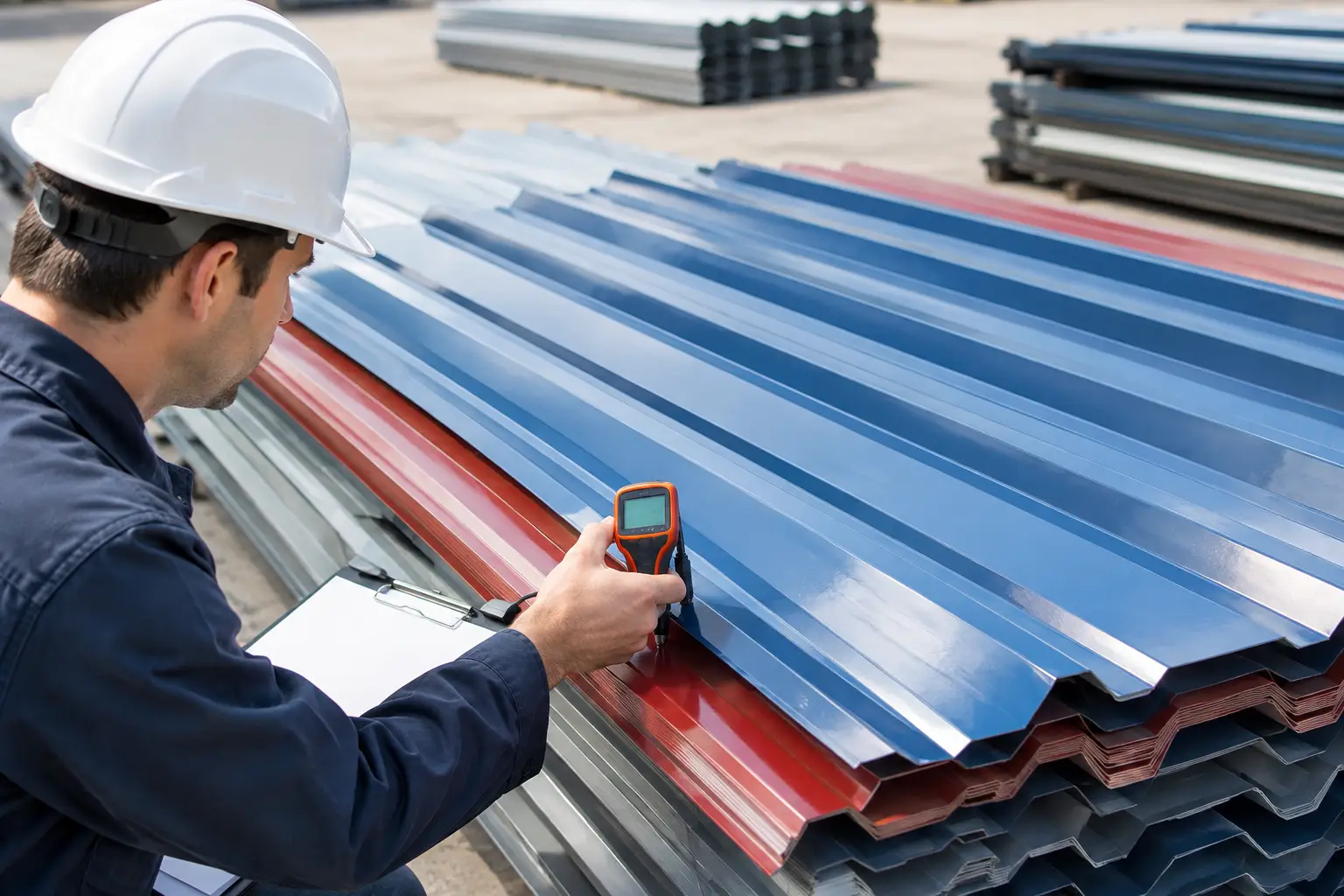
A PPGI coating assessment should happen before roofing or cladding sheets are approved for fabrication, not after the material reaches site. The visible color is only one part of the decision. For warehouses, factories, commercial buildings, prefab units, and industrial facilities, the coating system influences appearance retention, resistance to moisture and contaminants, maintenance needs, and the usable life of the external envelope.
Pre-painted galvanized iron, commonly called PPGI, combines a galvanized steel substrate with factory-applied paint layers. This makes it a practical choice for roof and wall applications where projects need efficient installation and a finished appearance. However, not every coated sheet is suitable for every exposure condition. A reliable assessment connects the coating specification to the building location, profile design, installation method, and expected service environment.
What a PPGI Coating Assessment Should Confirm
The purpose of a PPGI coating assessment is straightforward: confirm that the supplied sheet has the coating build, finish quality, and substrate protection appropriate for its intended use. Procurement teams often compare gauge, profile, color, and price first. Those factors matter, but they do not fully define long-term performance.
A useful assessment begins with the complete material specification. This includes the steel base thickness, galvanization level, paint system, nominal coating thickness, topcoat and backcoat finish, and protective film where applicable. It should also identify whether the sheet is intended for roofing, wall cladding, internal partitions, or fabrication into flashings and accessories.
For exterior roofing, the top side is exposed to sunlight, rain, airborne dust, humidity, and temperature variation. The reverse side also matters because condensation, poor ventilation, or contact with insulation can affect the underside over time. A sheet with a suitable topcoat but an inadequate backcoat may not be the right choice for every enclosed or moisture-sensitive application.
Start With the Project Environment
The same PPGI sheet can perform differently depending on where and how it is installed. In the UAE, project teams should consider heat, UV exposure, dust accumulation, humidity, and the possibility of saline air in coastal areas. Industrial surroundings can introduce additional contaminants. These conditions do not automatically require the most expensive coating system, but they do require an informed selection.
A roof on an inland storage warehouse has different exposure from wall cladding near the coast. A cold room facility presents another set of considerations, particularly around interior humidity control, panel joints, and condensation management. Where PPGI is used as the metal facing for insulated sandwich panels, the coating selection should be reviewed alongside the insulation core, joint design, sealing details, and intended operating conditions.
Color selection also has practical implications. Dark colors can create a strong architectural appearance, but they may absorb more heat than lighter shades. This does not make dark colors unsuitable. It means the project team should consider thermal movement, roof design, insulation requirements, and detailing rather than evaluating color only as an aesthetic preference.
Review the Coating System, Not Just the Color
PPGI coatings are commonly specified by their paint type and thickness. The paint type affects characteristics such as weathering behavior, gloss retention, flexibility, and resistance to the working environment. Coating thickness affects the level of barrier protection, but a thicker coating alone does not guarantee better suitability. Surface preparation, curing quality, substrate protection, and correct installation all influence the result.
For many standard roofing and wall cladding applications, a conventional polyester finish may be a practical choice when the environmental exposure and maintenance plan are appropriate. Higher-performance finishes may be considered where UV exposure, coastal conditions, or architectural appearance retention place greater demands on the sheet. The right decision depends on the project specification and expected exposure, not on a generic ranking of paint systems.
The coating assessment should also confirm that the finish can tolerate forming. Roofing sheets are roll-formed, while flashings, trims, and gutters may undergo bending during fabrication. A coating that looks satisfactory on a flat sample but cracks at bends can expose the metal underneath. This is why fabrication requirements should be communicated before material selection, especially for custom profiles and detailed trim work.
Surface Appearance and Consistency
Visual inspection remains an essential part of receiving PPGI material. Review coils or sheets under adequate light for color consistency, gloss variation, scratches, dents, stains, pinholes, and areas with uneven paint application. Protective film can reduce handling marks during processing, but it is not a substitute for careful lifting, storage, and installation.
Minor cosmetic variation may be acceptable in certain industrial applications, while highly visible commercial facades often require closer control of color and finish consistency. If multiple batches will be used on one elevation or roof area, it is sensible to manage batch selection carefully. Material ordered at different times can show slight variation, particularly in color or gloss.
Check the Edges, Cuts, and Fastener Areas
Roofing and cladding sheets are not installed as untouched factory surfaces. They are cut, lapped, fastened, bent, and sealed. These site operations create locations where poor workmanship can reduce the benefit of a good coating system.
Cut edges deserve particular attention. The galvanized layer beneath the paint provides additional protection, but cut edges should be kept clean and free from damage. Avoid uncontrolled abrasive cutting that can leave hot particles on the sheet surface. Those particles may embed in the coating and later create rust stains. Use appropriate cutting practices, remove metal swarf promptly, and avoid dragging sheets across one another.
Fastener selection and placement also affect coating durability. Roofing screws should be compatible with the sheet application and installed without excessive pressure that damages the washer or distorts the panel. Over-tightening can create stress around the fastener point, while under-tightening can allow water entry. Correct laps, sealants, flashings, and drainage details are equally important because standing water and debris can shorten the service life of any coated sheet.
Assess Handling and Storage Before Installation
A coating can arrive in good condition and still be damaged before installation. Coils and sheets should be stored off the ground, protected from standing water, and kept dry with sufficient ventilation. Water trapped between stacked sheets can cause staining or early surface deterioration. Long-term exposure to direct weather before installation should also be avoided.
During unloading, use lifting methods that prevent edge damage and surface abrasion. On site, installers should avoid placing tools, swarf, or wet materials on finished sheets. Protective film, if supplied, should be removed according to the product guidance and should not be left exposed longer than necessary. Heat and sunlight can make prolonged film removal more difficult.
These details are often treated as site housekeeping, but they directly support the value of the material investment. A well-selected PPGI sheet needs equally careful handling to deliver the appearance and performance expected by the client.
Documents and Samples That Support Better Procurement
For project purchasing, the assessment should be supported by clear documentation rather than verbal assumptions. Request the material specification and review the stated grade, base metal thickness, coating type, nominal paint thickness, color reference, and intended application. Where project requirements call for it, retain a sample or approved color reference before placing a larger order.
It is also helpful to align the material schedule with the building design. Confirm profile dimensions, sheet lengths, accessory requirements, insulation interfaces, and fixing details before finalizing quantities. This reduces unnecessary cutting on site and helps maintain a clean, consistent finish across roofing and cladding areas.
At MetalSpan Trading, the practical approach is to match PPGI and PPAL coated sheets with the application, project environment, and required profile rather than treating all coated steel as interchangeable. Clear technical discussions before supply help contractors plan fabrication, installation, and material handling with fewer surprises.
When a Standard Finish May Not Be Enough
A standard PPGI finish can be appropriate for many construction applications, particularly where exposure conditions are moderate and installation quality is controlled. It may not be the best fit for every project. Coastal structures, highly exposed roofs, buildings with demanding visual requirements, and moisture-sensitive facilities may need closer review of the coating system, substrate, and detailing.
This is also where the lowest initial price may not represent the lowest project cost. A cheaper sheet that requires earlier repair, replacement, or frequent cleaning can create avoidable disruption. On the other hand, specifying a premium coating for a low-exposure, short-term structure may add cost without a proportionate benefit. The right specification is the one that fits the building's actual conditions and service expectations.
Before approving coated sheets, compare the specification against the project drawings, site exposure, fabrication needs, and installation plan. A few focused checks at the procurement stage can protect the roof or facade long after handover.