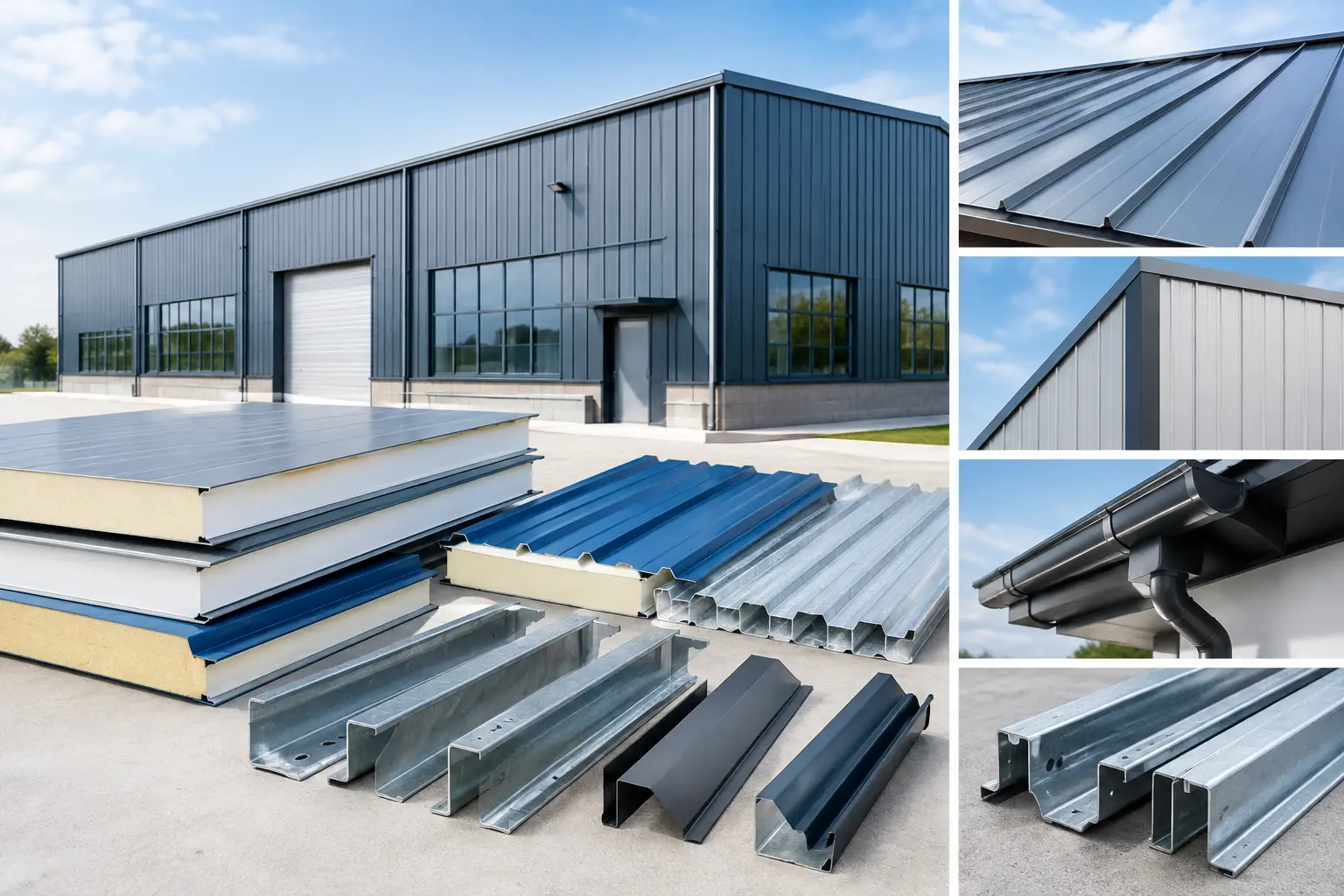
A roofing sheet can look suitable in a sample and still be the wrong choice for the project. The difference often comes down to the aluminum grade, coating system, sheet thickness, profile, and the conditions around the building. This PPAL selection guide helps contractors, fabricators, and procurement teams specify prepainted aluminum sheet with the practical details that affect installation, appearance, and service life.
PPAL, commonly used to describe prepainted aluminum, is valued for its low weight, corrosion resistance, and clean finished appearance. It is widely considered for roofing, wall cladding, flashings, gutters, portacabins, and selected industrial applications. However, PPAL is not a one-specification material. The correct selection depends on where it will be installed, how it will be formed, and what the completed building requires.
Start With the Building Application
The first selection question is simple: what job must the sheet perform? A decorative wall elevation, a warehouse roof, a perimeter cladding system, and a gutter face different demands. Treating them as the same application can lead to unnecessary cost or an under-specified material.
For roofing, the sheet must suit the panel profile, support spacing, slope, drainage arrangement, and anticipated site exposure. Long roof sheets may require careful handling and installation planning because aluminum expands and contracts with temperature changes. The fastening arrangement, side laps, and flashings should all be considered together rather than selected after the sheets arrive on site.
For wall cladding, visual consistency and flatness may be more prominent considerations. A broad wall facade can make minor variations in shade, gloss, or installation alignment more visible. Where sheets will be bent into trims, corners, or custom flashings, forming capability also becomes a key part of the order.
Cold rooms and temperature-controlled spaces require a separate approach. In many cases, insulated sandwich panels are the more appropriate building-envelope solution because insulation performance, joint design, and panel interfaces matter as much as the external finish. PPAL may still be relevant as a facing material or for related flashings, but the full system should be reviewed as one package.
PPAL Selection Guide: Check the Base Metal First
The paint layer receives most of the attention, but the aluminum substrate is the foundation of the product. Its alloy and temper influence formability, strength, and suitability for the intended profile or fabricated component.
A sheet intended for simple flat cladding may not require the same forming characteristics as material used for tightly folded flashings or gutters. Likewise, a deeper-profile roofing sheet needs a substrate selected to work with that profiling process and the structural arrangement of the roof. Procurement documents should not simply state “painted aluminum sheet.” They should identify the required aluminum grade or agreed material standard, nominal thickness, coating finish, color, and final profile where applicable.
Thickness should be selected according to the application and project design, not by appearance alone. A thicker sheet can provide better resistance to handling damage and improve stiffness in some applications, but it also affects project cost and weight. A thinner sheet may be suitable for carefully designed non-structural cladding, while demanding roofing or fabricated details may call for a different specification. The final decision should account for sheet profile, purlin spacing, wind design requirements, and the recommendations of the project engineer or system designer.
It is also good practice to confirm whether thickness is stated as base metal thickness or total coated thickness. Clear terminology helps avoid misunderstandings between quotations, shop drawings, and delivered materials.
Select a Coating for the Exposure Level
The prepainted finish gives PPAL its color and much of its visual appeal, but it also provides a protective layer against weathering. Coating selection should be based on the building environment, expected appearance retention, cleaning practices, and planned design life.
A standard painted finish may be appropriate for many general building applications. Projects in harsh sunlight, coastal areas, industrial zones, or locations exposed to airborne contaminants may require closer review of coating type and coating thickness. The UAE climate makes this especially relevant. Heat, ultraviolet exposure, dust, and salt-laden air near coastal locations can all influence how a finish performs over time.
Color is not only an architectural decision. Darker colors can absorb more heat than lighter shades, which may affect surface temperatures. Gloss level also changes how the building looks after installation. High-gloss surfaces can create a sharp visual effect but may show surface irregularities more readily. Lower-gloss finishes can offer a more restrained appearance and may be better suited to certain commercial or industrial elevations.
For projects where color consistency is critical, confirm the selected color code, finish, and batch requirements before production or supply. Samples are useful for approval, but they should be treated as visual references rather than substitutes for an agreed written specification.
Match the Profile to Drainage and Installation
A suitable PPAL sheet becomes a functional roof or wall system only when its profile matches the design. Corrugated, trapezoidal, and custom-profile sheets each have different visual and practical characteristics. Profile depth, rib spacing, effective cover width, lap arrangement, and fixing points should be coordinated with the project drawings.
For roofing, water management deserves particular attention. The roof slope, sheet length, end laps, side laps, sealant requirements, and flashing details all contribute to drainage performance. A good sheet selection cannot compensate for poor lap detailing or incorrectly installed fasteners.
Where long sheets are required, plan lifting, storage, and site movement before delivery. Aluminum sheets can be damaged by dragging, stacking without protection, or contact with abrasive materials. Site teams should store sheets on a dry, supported base with adequate protection from standing water, dirt, and unnecessary exposure before installation.
Flashings, ridge caps, gutters, and closures should be specified alongside the main sheets. Ordering these components separately without checking color, material compatibility, and dimensions can create avoidable delays during installation. A coordinated package supports cleaner detailing and a more consistent finished appearance.
Consider Compatibility at Every Connection
The surrounding materials matter when selecting PPAL. Aluminum can react unfavorably when it remains in contact with certain dissimilar metals or incompatible wet materials. The risk depends on the materials involved, moisture exposure, and the building environment.
Fasteners, washers, sealants, insulation facings, support members, and adjacent flashings should therefore be reviewed as a system. Use suitable fasteners and separation methods where required by the design. This is especially important at roof penetrations, gutters, parapets, and connections where moisture may collect.
The same principle applies to cleaning and maintenance. Abrasive cleaning methods or unsuitable chemical products can damage the painted surface. For most routine conditions, periodic removal of dust and accumulated debris using an appropriate cleaning approach helps preserve the building’s appearance. Maintenance requirements should be practical for the facility owner, particularly for large warehouses, factories, and commercial premises.
Ask for the Details That Protect the Order
A clear inquiry produces a clearer quotation and reduces the chance of receiving material that does not match the installation requirement. Before requesting PPAL sheets, prepare the project information that a supplier needs to review the requirement accurately:
- Application: roofing, wall cladding, flashing, gutter, facade detail, or fabricated component.
- Required dimensions: sheet length, width, profile, effective cover width, and quantity.
- Material specification: aluminum grade or agreed standard, nominal thickness, and finish requirement.
- Coating details: color, gloss preference, coating type where specified, and exposure conditions.
- Site conditions: coastal location, industrial exposure, roof slope, support spacing, and access limitations.
- Related components: fasteners, closures, flashings, ridge caps, gutters, and insulation or panel interfaces.
This information allows the supplier and project team to identify practical issues early. It also makes it easier to compare quotations on the same basis instead of comparing only the price per sheet or per square foot.
Balance Initial Cost With Project Fit
The lowest-priced PPAL option is not always the lowest-cost choice after fabrication, installation, maintenance, and replacement risk are considered. A finish that does not suit the site environment, a thickness that does not suit the profile, or a poorly coordinated accessory package can create additional work later.
At the same time, specifying beyond the actual project need can add cost without meaningful benefit. The right approach is proportionate selection: choose a material specification that matches the building use, location, design requirements, and expected maintenance approach.
For projects in the UAE, MetalSpan Trading FZE LLC can support procurement teams with PPAL sheet options and related roofing and cladding materials while helping clarify the details needed for a practical quotation. Bring the roof layout, profile requirement, color preference, and site conditions into the conversation early. A well-defined PPAL selection gives installers fewer surprises and gives the completed building a finish that is easier to stand behind.