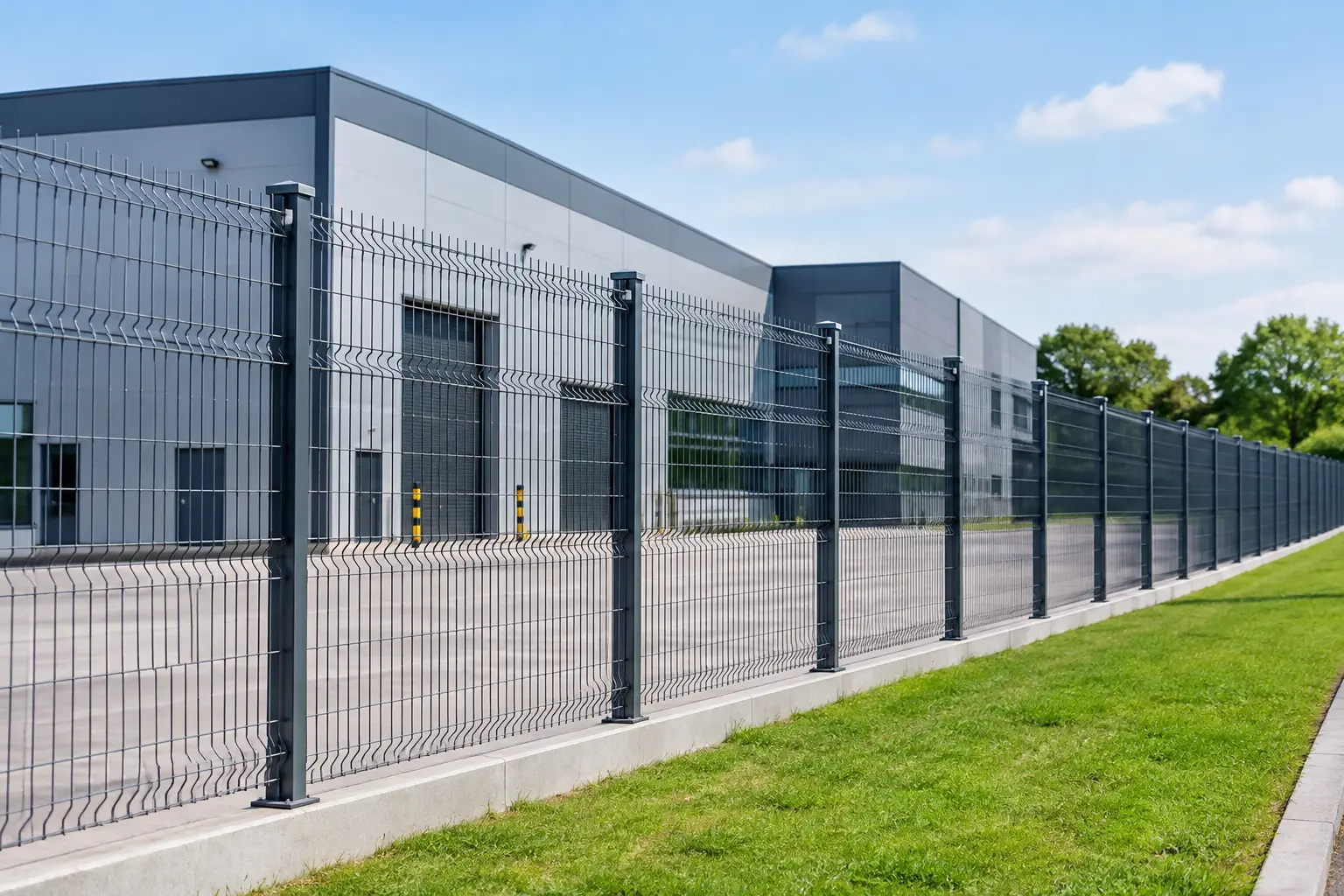
A construction boundary has a practical job to do before the main building begins to take shape. It must define the work area, limit unauthorized entry, protect stored materials, and give the project a professional appearance. The right industrial site fencing panels help contractors achieve these goals without creating unnecessary installation delays or maintenance costs.
For warehouses, factories, prefab housing projects, storage yards, and commercial developments, fencing is often treated as a temporary item. That can lead to weak sheet selection, insufficient framing, or gates that do not suit daily vehicle movements. A better approach is to specify the fence around site conditions, project duration, security needs, and the materials available for reliable replacement or extension.
What Industrial Site Fencing Panels Need to Handle
Site fencing is exposed from the first day of construction. In the UAE, heat, dust, wind, and frequent vehicle activity can place significant demands on sheets, posts, fasteners, and access points. A panel that looks adequate on paper may perform poorly if the support structure is light or the fixing method is not suited to the site.
For many industrial and construction applications, profiled galvanized steel sheets or pre-painted galvanized steel sheets are practical cladding options for fence runs. Their formed profile adds stiffness compared with flat sheet material, while the steel surface provides a clean, consistent boundary. The final selection should consider sheet thickness, coating type, profile depth, required fence height, and how the panels will be supported.
A fence is not only a line of sheets. It is a small external wall system. The posts carry loads into the ground, horizontal rails support the sheets, fasteners hold the assembly together, and flashings or capping details can improve the finish where required. When these components are considered together, the result is easier to install and maintain.
Choose Panels Based on the Site, Not Appearance Alone
A solid metal fence gives better visual screening than open mesh fencing, which can be useful where equipment, materials, or active work areas should not be visible from outside the property. It also provides a more controlled perimeter for industrial developments and construction sites near public roads or neighboring facilities.
However, complete visual screening is not automatically the right choice for every location. Sites with higher wind exposure need suitable post spacing, rail design, foundations, and sheet fixing patterns. A continuous solid barrier can receive greater wind pressure than an open fence. Engineers and contractors should account for local loading requirements and the fence height before finalizing the structural arrangement.
Galvanized steel sheets are commonly selected where a functional, economical finish is the priority. Pre-painted galvanized sheets can be considered when the project requires a more uniform external appearance, color identification, or a cleaner presentation for a longer-term site. In both cases, the quality of the coating, handling during installation, and treatment of cut edges affect the finished result.
For short-duration projects, contractors may prioritize panels that can be removed and reused. For a longer industrial boundary, heavier framing and more permanent foundations may be justified. The lowest initial material cost is not always the lowest project cost if fencing needs frequent repair, replacement, or reinforcement during operations.
Match the Sheet Profile to the Supporting Frame
Profiled sheets are available in different shapes and depths. Deeper profiles can offer greater stiffness, but the right choice still depends on rail spacing and wind exposure. Thin sheet fixed across wide rail spans may flex, vibrate, or become damaged at fixing points.
The panel layout should allow for straight, secure fixing into horizontal steel rails or other approved supporting members. Fasteners should be selected for the sheet and frame materials, with washers where appropriate to help distribute pressure at the fixing point. Consistent fixing spacing matters, particularly at corners, gate areas, and exposed perimeter sections.
Avoid treating cut sheets as an afterthought. Site cutting may be necessary around corners, slopes, service entries, and gates, but cut edges should be neat and protected as required by the selected sheet system. Careful setting out reduces waste and gives the fence a more professional finish.
Plan the Perimeter Before Materials Arrive
Procurement works best when the contractor has a clear perimeter drawing rather than a simple linear-meter estimate. The layout should identify corners, changes in level, gate openings, pedestrian access, temporary openings for deliveries, and areas where fencing may need to move as work progresses.
Fence height should reflect the site environment and project requirements. Taller fencing improves screening and access control, but it also increases material quantities, structural demand, and installation effort. A height that is suitable for a remote storage yard may not be suitable beside a public road, active commercial property, or an area exposed to strong winds.
It is also useful to decide early whether the fence will carry project signage. If signs are planned, allow for their size, fixing method, and wind exposure. Attaching large signs to light-gauge fence sheets without additional support can distort the panels or loosen fasteners over time.
Do Not Underestimate Gates and Access Points
Gates are often the busiest part of the fence and need more attention than standard panel runs. A vehicle entrance may need enough clear width for trucks, cranes, forklifts, or material deliveries. Pedestrian access should be separate where site procedures require controlled entry and exit.
The gate frame, hinges, wheels, locking arrangement, and ground condition should match the expected usage. A lightweight gate may be acceptable for occasional access, but frequent industrial traffic requires a more durable arrangement. The gate posts also need adequate support because repeated opening and closing places loads on the structure that ordinary fence posts may not handle.
Where a site boundary includes several access points, standardizing the gate design can simplify procurement and future maintenance. Keep spare fasteners, matching sheet material, and repair lengths available when the project schedule is long or the perimeter is subject to regular traffic.
Installation Details That Protect the Investment
Good fencing materials can still fail early through poor handling. Steel sheets should be stored above ground, protected from standing water, and handled carefully to avoid scratches, dents, and bent profile edges. If sheets arrive with protective film, it should be managed according to the product requirements and not left in place longer than recommended.
During installation, check line and level at regular intervals instead of correcting a long run at the end. Small alignment errors become much more visible across a large industrial perimeter. Posts should be set securely, rails should be level, and sheet laps should face a consistent direction for a tidy appearance.
Open edges and corners deserve particular attention. These locations are more exposed to accidental impact and wind movement. Corner flashings, top caps, or purpose-made trims can improve the appearance and help shield sharp sheet edges where the fence design calls for them. They also make the boundary look like a planned site installation rather than an improvised barrier.
Procurement Questions That Prevent Delays
Before requesting a quotation, project teams should confirm the total run length, required height, preferred sheet finish, framing concept, gate quantities, and expected installation date. They should also consider whether materials need to be delivered in phases as the site develops.
For UAE projects, dependable scheduling is especially valuable when fencing is needed before equipment, labor, or high-value building materials arrive on site. A supplier that understands steel sheets, profiles, flashings, and related construction materials can help align the sheet selection with the broader project envelope and site requirements. MetalSpan Trading FZE LLC supports contractors and industrial projects with practical steel material options and clear procurement support.
Ask for material details that allow an accurate comparison: sheet type, thickness, coating or finish, profile, usable cover width, lengths, and accessory requirements. If fencing is part of a wider roofing or cladding package, coordinating colors, sheet profiles, and delivery sequencing can reduce site complexity.
Industrial site fencing panels perform best when they are planned as part of the project setup, not purchased after the site is already active. A well-considered perimeter protects the work area, supports orderly operations, and gives the project a standard that clients, workers, and visitors can see from the first day.