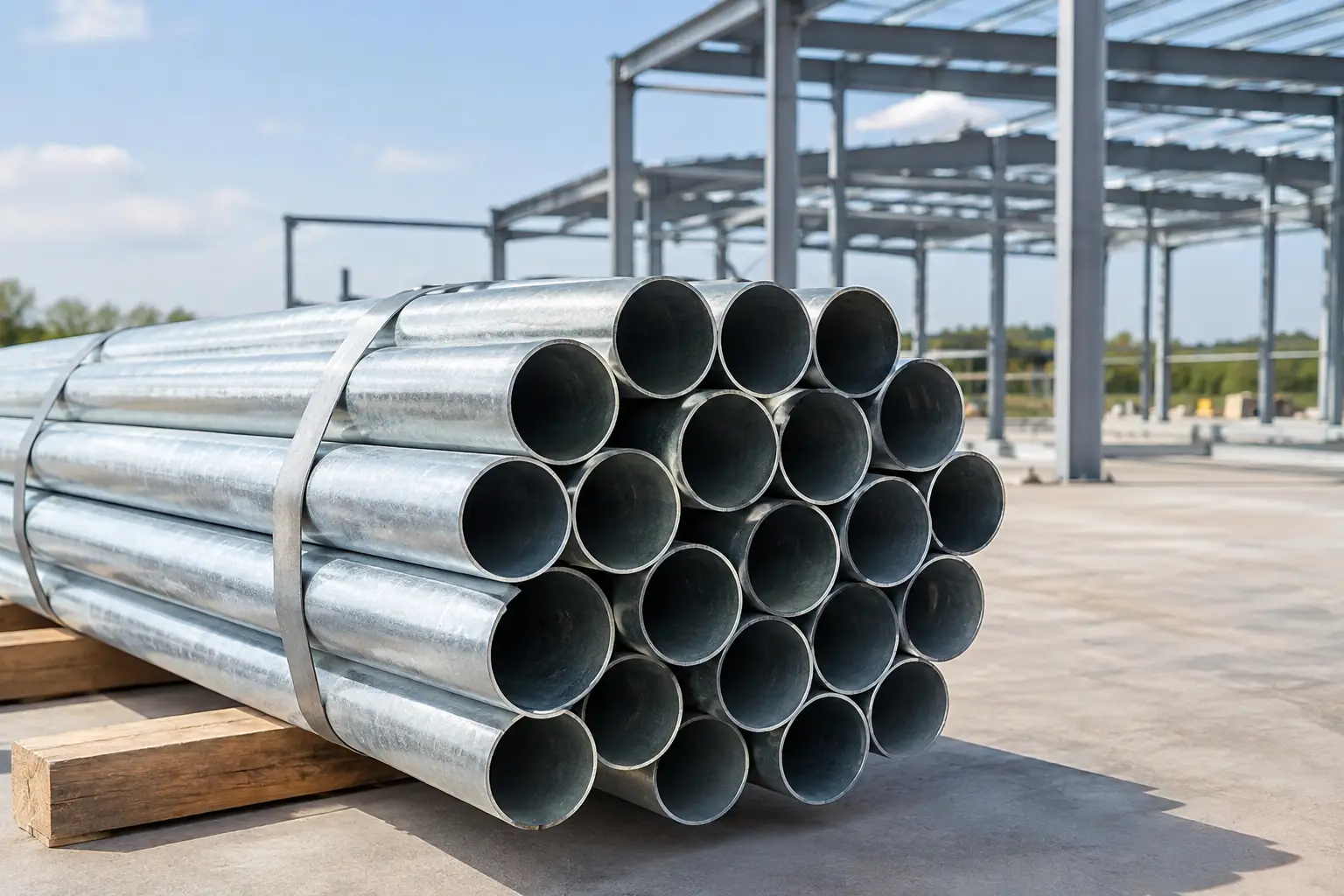
A pipe can look sound at delivery and still create avoidable site delays if its coating, wall thickness, end finish, or intended use was not confirmed before purchase. For contractors and fabricators, galvanized steel pipe is often selected because it offers practical corrosion resistance, familiar fabrication options, and dependable performance across many construction applications. The right choice, however, depends on more than pipe diameter.
Galvanized pipe is used in handrails, fencing, light structural frames, service supports, agricultural installations, and selected water or drainage applications. In UAE projects, where heat, humidity, airborne dust, and coastal exposure can all affect exposed steel, specifying the right material and handling it correctly can help protect both the schedule and the finished appearance.
What Galvanized Steel Pipe Is
Galvanized steel pipe is carbon steel pipe protected with a zinc coating. The zinc forms a barrier between the steel and the surrounding environment. It also provides a degree of sacrificial protection, meaning the zinc can corrode preferentially before the underlying steel at small damaged areas.
The term is used broadly, so buyers should not assume every galvanized pipe has the same coating process, thickness, or application suitability. Hot-dip galvanized pipe is immersed in molten zinc after fabrication, creating a durable coating that generally includes both external and internal surfaces. Other zinc-coated products may be processed differently and may not offer the same coating build or service life.
For a project team, the practical question is not simply whether the pipe is galvanized. It is whether the pipe specification suits the location, load, connection method, and expected exposure conditions.
Where Galvanized Pipe Fits in Building Work
Galvanized pipe is a practical option where steel needs a protective finish without the additional work of applying a full paint system. It is commonly considered for external fabricated items such as guardrails, gates, bollards, pipe racks, sign supports, temporary works, and utility supports. It can also be used in modular and prefab applications where repeatable steel components must be fabricated, moved, and assembled efficiently.
For exposed external work, galvanized pipe can reduce early surface-corrosion concerns compared with uncoated mild steel. That does not make it maintenance-free or appropriate for every environment. Highly corrosive industrial settings, continuous wet conditions, chemical contact, and severe marine exposure may require a more detailed corrosion-protection assessment.
Pipe used for fluid conveyance deserves separate review. The service medium, operating pressure, temperature, local code requirements, fitting compatibility, and water-quality considerations all matter. A pipe suitable for a handrail is not automatically suitable for a pressurized utility line.
Selecting the Right Galvanized Steel Pipe
A reliable purchase request gives the supplier enough information to match material to the intended work. Diameter is only one item. Wall thickness, length, grade, coating type, and end preparation can directly affect fabrication time, structural behavior, and installation cost.
Start With the Application and Load
For railings, frames, supports, and other fabricated assemblies, establish whether the pipe carries structural load, resists impact, or primarily provides enclosure or access control. A thicker wall may improve stiffness and resistance to local damage, but it also adds weight, cost, and handling effort.
Where pipe is part of a designed structural assembly, follow the engineer's drawings and approved material schedule. Substituting a lighter pipe because the outside diameter looks the same can affect connection strength and member capacity. The same caution applies when replacing specified pipe with tube or other hollow sections, which may have different dimensional and mechanical properties.
Confirm Size, Schedule, and Length
Nominal pipe size does not always match the actual outside diameter in the way a new buyer expects. Pipe schedules describe wall thickness, while actual dimensions should be checked against the relevant standard and project requirement. This matters particularly when fittings, clamps, threaded components, or pre-designed brackets are involved.
Standard lengths can reduce cutting waste and simplify transport, but site access should also be considered. Long lengths may be efficient in a workshop yet difficult to unload or maneuver in restricted areas. Planning cuts around the fabrication layout often saves more than selecting the lowest unit price per meter.
Review Ends and Connections
Galvanized pipe may be supplied plain-ended, threaded, or prepared for a specified connection method. Threaded pipe can be useful for certain utility and modular assemblies, while plain ends are common for welded fabrication. Confirm the required end condition before ordering because rework on site can slow installation and expose bare steel.
Welding galvanized steel requires controlled procedures. Heating the zinc coating produces fumes, so adequate ventilation, proper personal protective equipment, and trained personnel are essential. The coating around the weld will be damaged and should be repaired with an approved zinc-rich repair method or another project-approved system. This work should be included in the fabrication plan, not treated as an afterthought.
Coating Quality and Site Inspection
A galvanized coating should have consistent coverage, but it does not need to look perfectly smooth or glossy to be fit for purpose. Minor variations in appearance can occur due to the steel chemistry, fabrication details, and galvanizing process. What matters is that the coating meets the required standard and provides suitable coverage for the application.
At delivery, a simple visual inspection helps identify issues before material enters fabrication. Check for excessive bare areas, heavy runs that may interfere with assembly, blocked threaded ends, transport damage, moisture trapped in bundles, and incorrect labels or dimensions. Where the project calls for documented coating thickness, material certificates, or specific standards, request these as part of the procurement package rather than after the material reaches site.
Pay close attention to cut edges, drilled holes, and ground areas. These locations may need touch-up protection, particularly on external installations. The repair system should be compatible with the galvanized surface and applied to clean, properly prepared steel.
Storage and Handling Matter More Than Expected
Zinc coatings are durable, but poor storage can affect their condition. Pipe should be kept off the ground on suitable timber bearers or racks, with enough support to prevent bending or point damage. Avoid dragging lengths across concrete, gravel, or steel edges, as this can scratch the coating.
If bundles become wet during transport or storage, allow ventilation so moisture does not remain trapped between tightly packed pipes. White surface staining, often associated with wet storage conditions, can occur when zinc remains in prolonged contact with moisture and has limited airflow. It may be primarily cosmetic in some cases, but heavy deposits should be assessed before installation.
For coastal projects, protect stored material from standing water, salt contamination, and unnecessary exposure before installation. Good housekeeping does not replace the correct coating specification, but it prevents a suitable material from being compromised before the work begins.
Common Procurement Mistakes to Avoid
Most pipe problems begin with incomplete specifications or a mismatch between design intent and site practice. Avoid these recurring issues:
- Ordering by outside diameter only, without confirming wall thickness or schedule.
- Assuming all galvanized coatings have the same performance in every environment.
- Selecting welded fabrication without allowing for fume control and coating repair.
- Mixing pipe, tube, and structural hollow sections without verifying dimensions and design requirements.
- Leaving fittings, clamps, caps, base plates, and corrosion repair materials out of the material takeoff.
A complete request for quotation should state the application, quantity, nominal size, wall thickness or schedule, standard length, required end condition, coating requirement, and applicable project specifications. If the pipe will connect to existing work, include the relevant connection details. Clear information enables accurate pricing and reduces the risk of receiving material that is difficult to install.
A Practical Supply Approach for UAE Projects
Construction schedules often depend on coordinated material deliveries rather than individual items arriving in isolation. For fabricated railings, roof access systems, utility supports, and light steel assemblies, pipe requirements should be reviewed alongside plates, brackets, fasteners, protective finishes, and any related roofing or cladding interfaces.
MetalSpan Trading supports project procurement with practical construction-material coordination, helping contractors identify suitable material requirements before delivery planning begins. For galvanized pipe, that means confirming what is needed for the actual installation rather than relying on a generic description.
The best galvanized pipe purchase is one that reaches the workshop or site ready for its intended purpose: correctly specified, carefully inspected, protected during handling, and supported by a clear fabrication plan. That preparation keeps small material decisions from becoming larger project problems.