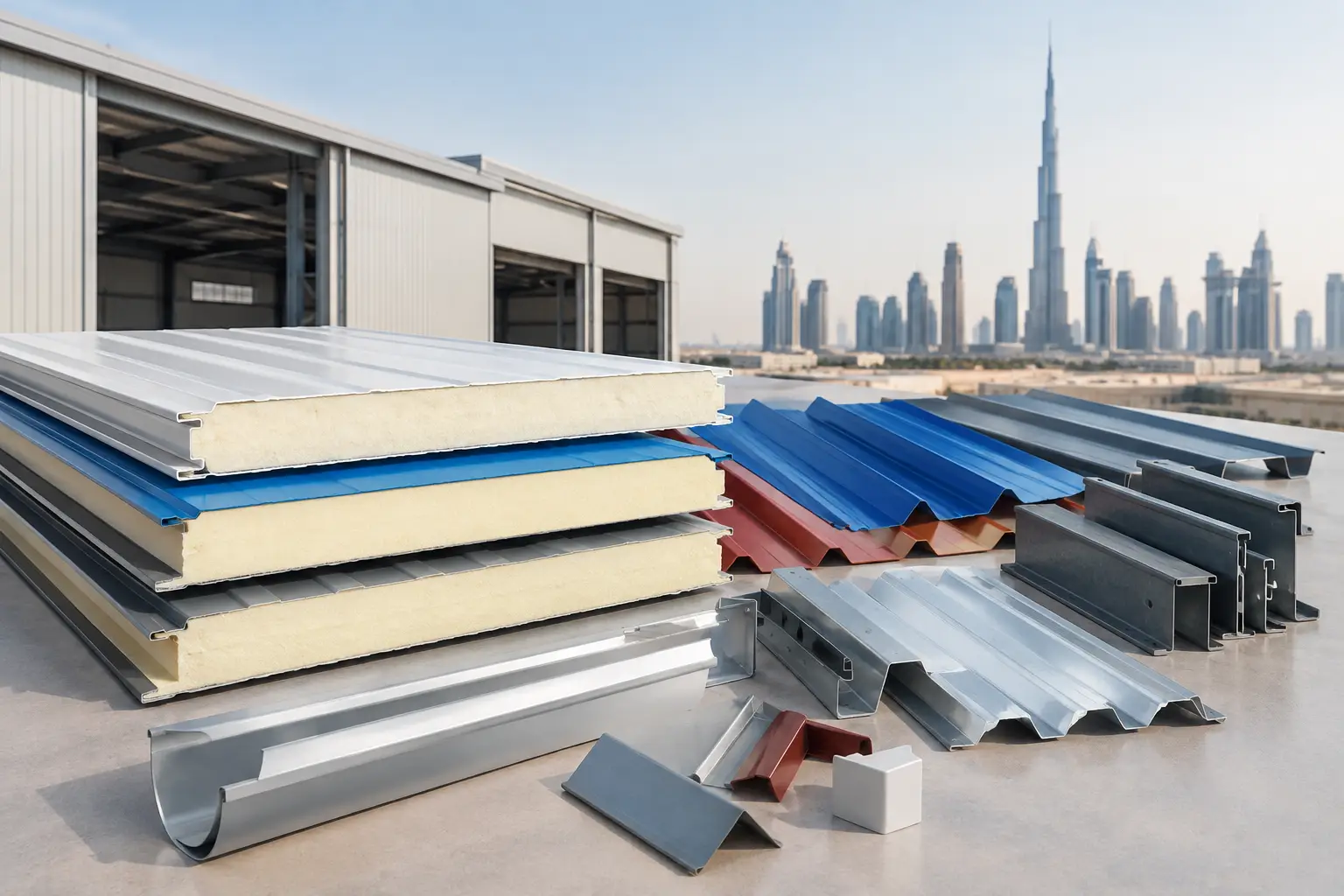
A warehouse roof, factory wall, prefab unit, or cold storage enclosure is only as reliable as the materials specified and supplied for it. When a project team searches for a sandwich panel supplier UAE customers can depend on, the decision should go beyond the panel price per square meter. Panel core type, facing material, thickness, accessories, handling requirements, and delivery coordination all influence the finished building.
For contractors, fabricators, consultants, and procurement teams, the right supplier helps reduce uncertainty before materials reach the site. That means receiving practical product guidance, clear quotation details, compatible components, and a delivery plan that supports the construction sequence.
What to Look for in a Sandwich Panel Supplier in UAE
Sandwich panels combine two metal facings with an insulated core, providing a practical solution for roofing, wall cladding, partitions, and temperature-controlled spaces. However, not every panel is suitable for every application. A supplier should first understand where the panel will be used and what the project requires.
For example, a panel selected for a standard industrial warehouse may have different insulation, fire-performance, or surface requirements than one used in a cold room. Likewise, roofing panels need appropriate profiling, overlap details, and weatherproofing accessories, while wall panels may require specific joint arrangements and finishes.
A reliable supplier will ask relevant questions before recommending a material. These typically include the building type, panel application, required dimensions, insulation needs, design drawings, expected quantities, and preferred delivery location. This early clarification helps prevent costly changes once installation has started.
Product range matters when project requirements change
Construction schedules often evolve. A project that begins with roof and wall panels may later require flashings, ridge caps, gutters, purlins, coated sheets, or replacement materials. Working with a supplier that carries related steel building materials can simplify procurement and help maintain compatibility between components.
For projects across the UAE, it is useful to source insulated panels alongside the accessories needed to complete the enclosure. Matching flashings, closures, fasteners, trims, and weathering details should be considered as part of the system, not as an afterthought. Missing or unsuitable accessories can affect appearance, water management, and installation progress.
Match the Panel Type to the Building Use
The best panel is not necessarily the thickest or the lowest-priced option. It is the panel that fits the building's operating conditions, design requirements, and budget.
PU insulated sandwich panels are commonly selected where thermal insulation and efficient installation are priorities. PIR insulated sandwich panels are often considered for projects where enhanced fire-related performance is part of the specification. Fire-retardant panel options should always be reviewed against the project drawings, consultant requirements, and applicable local approvals.
Cold room and cold store panels serve a more specialized purpose. These projects require attention to insulation continuity, joint design, vapor control, floor and wall interfaces, door openings, and the temperature conditions the facility is intended to maintain. Panel selection for cold storage should be coordinated with the complete room design rather than purchased as a standard wall-cladding item.
Roofing and wall applications have different priorities
Roof panels must address drainage, panel orientation, end laps where applicable, ridge details, and penetrations for equipment or services. The panel profile and accessory selection should support the roof layout and site conditions.
Wall panels require equal attention to joint alignment, corner flashings, openings, base details, and visual finish. In commercial and industrial buildings, wall cladding is often highly visible. Consistent color, clean detailing, and properly planned trims make a meaningful difference to the completed facade.
Review Specifications Before Requesting a Final Quote
A quote is most useful when it is based on clear, comparable information. Requesting a price without confirming the core type, panel thickness, facing thickness, finish, profile, length, and quantity can create confusion later. Two panels may look similar in a brief description while serving different project requirements.
Project teams should provide drawings or a panel schedule whenever available. If these documents are not yet finalized, a supplier can still prepare an initial budget estimate, but the basis of the quotation should be clear. This allows the contractor to compare options accurately and update quantities as the design develops.
Key points to confirm include panel orientation, required lengths, color requirements, insulation core, metal coating or finish, expected quantity, and the accessories included in the supply. For roofing projects, it is also sensible to review ridge caps, gutters, flashing profiles, and closures at the same time.
For structural support items, such as Z and C purlins or floor decking sheets, coordination with the approved structural design is essential. These components should not be selected only on availability or price. Their dimensions, thicknesses, spans, and connection details must suit the project requirements.
Delivery Planning Is Part of Material Selection
Panel quality is important, but site delivery planning is equally practical. Long panels require suitable transport, safe unloading arrangements, and adequate site storage. If panels are delivered before the installation area is ready, they may be exposed to unnecessary handling or site congestion.
Discuss delivery requirements early with the supplier. Confirm the delivery address, access conditions, unloading equipment, storage area, project schedule, and preferred sequence of materials. A phased delivery may be more appropriate for a large warehouse, factory, or multi-building development than receiving every item at once.
This is particularly relevant for projects in industrial areas, where access restrictions, operating hours, and coordination with multiple trades can affect unloading. Dependable delivery planning does not mean promising an unrealistic date. It means communicating clearly, confirming requirements, and coordinating supply with the actual project timeline.
Price Should Be Evaluated in Context
Competitive pricing matters on every construction project. However, the lowest initial panel rate may not represent the lowest overall project cost if it excludes essential accessories, creates specification gaps, or requires rework during installation.
A practical comparison considers the complete supply package: panel specifications, lengths, trims, flashings, purlins where required, coating options, quantities, packing, delivery arrangements, and technical support. It should also account for whether the supplier understands the application well enough to identify missing details before they become site issues.
For procurement teams, a clear quotation with defined scope is more valuable than a vague figure that changes once the order is being processed. Ask what is included, what is excluded, and whether the listed materials align with the submitted drawings or bill of quantities.
Work With a Supplier That Supports Clear Decisions
Material procurement is easier when communication is direct. A good supplier should be able to explain product options in practical terms, identify the information needed for a quote, and help customers organize their order around the project sequence.
MetalSpan Trading FZE LLC supplies PU and PIR insulated sandwich panels, fire-retardant panels, cold room panels, roofing and wall sheets, steel accessories, purlins, decking sheets, flashings, gutters, and ridge caps for projects across the UAE. The focus is on supplying suitable materials with clear product guidance, competitive commercial support, and dependable coordination from quotation through delivery.
Before placing an order, take time to review the panel schedule, site requirements, and complete accessory list with your supplier. A well-prepared material package gives installers a stronger starting point and helps the project move forward with fewer avoidable questions on site.