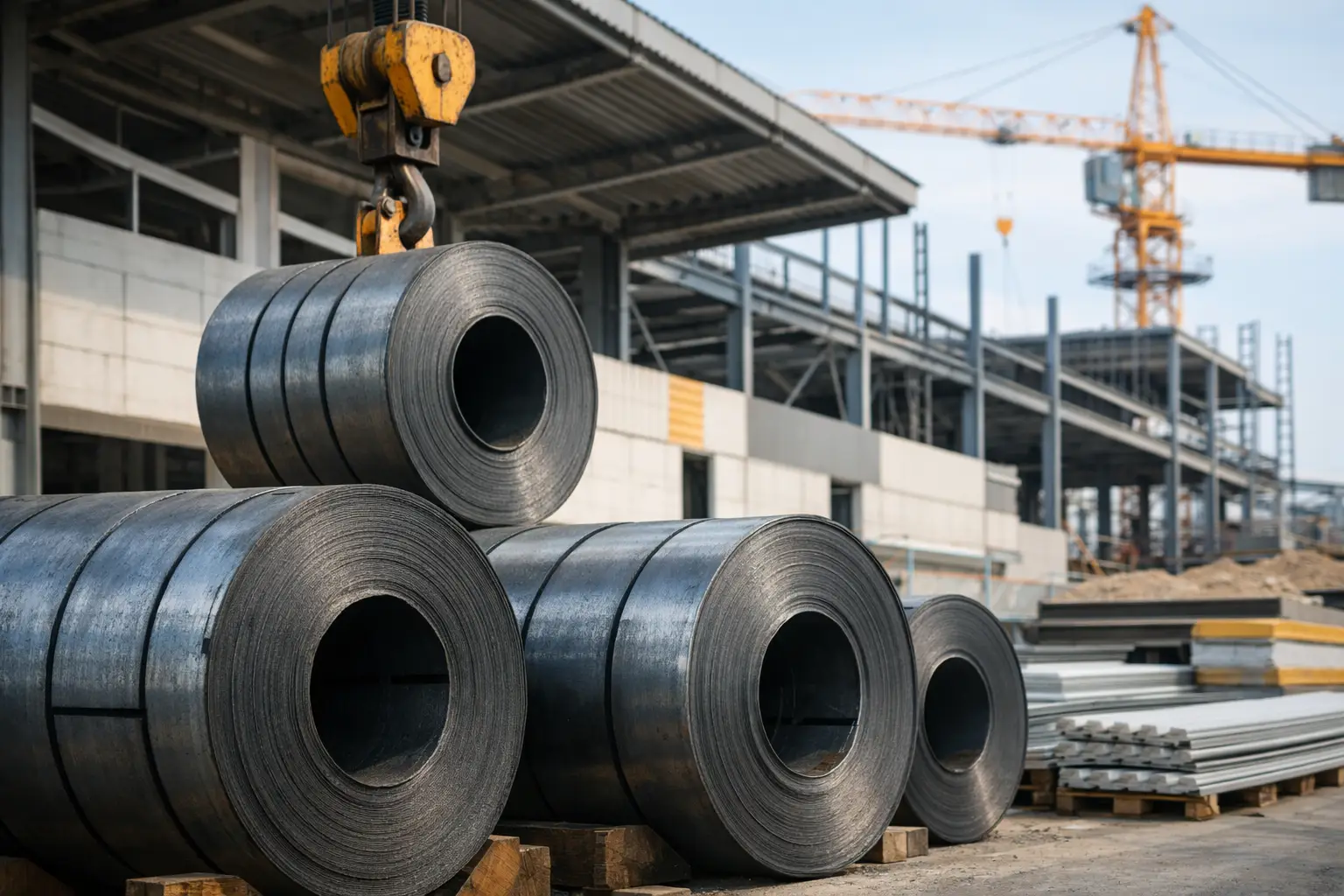
A coil that arrives after fabrication has started, carries the wrong edge condition, or does not match the agreed grade can disrupt far more than one purchase order. For fabricators and construction procurement teams, selecting a hot rolled coil supplier is a decision that affects material yield, production planning, cost control, and the reliability of the finished steelwork.
Hot rolled coil is commonly used as a base material for fabricated steel components, formed sections, plates, and further-processed products. It is not a one-size-fits-all material. The right coil depends on how it will be cut, bent, welded, formed, coated, or incorporated into the wider building package.
Start With the Actual Fabrication Requirement
A supplier can only quote accurately when the requirement is clear. A request for hot rolled coil should define more than thickness and width. It should explain the intended application, because the material selected for general fabrication may not be suitable for demanding forming or controlled welding work without confirming the relevant grade and properties.
At a minimum, the purchase requirement should identify the required steel grade or applicable standard, thickness tolerance, coil width, coil weight range, and quantity. Edge condition also matters. Mill edges may suit some applications, while trimmed edges may be preferred when consistent width and cleaner processing are important.
Project teams should also consider the coil's internal diameter, outer diameter limitations, and maximum weight that their handling equipment can safely manage. A coil that meets the chemical and mechanical requirements but cannot be unloaded or fed into the production line efficiently creates an avoidable site or factory problem.
Match the Coil to the Next Process
The next process is often the most useful question to ask. Will the coil be slit into narrower strips? Will it be cut into sheets, welded into fabricated elements, or passed through a roll-forming line? Will it receive a protective coating later in the process?
Hot rolled coil generally has a mill-scale surface created during rolling. That may be acceptable for certain structural and fabrication uses, but it can require surface preparation before painting or coating. If appearance, coating adhesion, or surface consistency is a priority, the procurement team should discuss whether a different processing route or surface condition is required.
This is especially relevant when hot rolled coil is part of a wider construction-material scope. Roofing sheets, wall cladding, galvanized sheets, and pre-painted steel products have different finish and corrosion-resistance requirements from uncoated hot rolled material. Treating them as interchangeable can lead to specification errors.
What a Reliable Hot Rolled Coil Supplier Should Confirm
A dependable hot rolled coil supplier should ask practical questions before finalizing the offer. The conversation should cover material suitability, not simply price per metric ton. Clear communication at this stage helps prevent mismatched coil dimensions, unsuitable grades, or delivery arrangements that do not fit the project schedule.
The supplier should be able to confirm the available grade, origin where relevant to the buyer's requirements, dimensional range, estimated coil weight, and packing method. They should also state whether the quoted material is subject to mill availability or whether it is available for allocation.
Documentation is equally important. For projects that require traceability, ask in advance about material test certificates, packing lists, commercial invoices, and coil identification details. The required documents should be agreed before the order is released, rather than requested after delivery.
A practical supplier relationship is built on direct answers. If a requested thickness is outside the standard range, if a particular grade needs additional lead time, or if coil weights vary by production lot, those points should be communicated clearly. Procurement teams can then adjust their plan rather than discover constraints after material has been dispatched.
Price Is Only One Part of the Purchase Decision
Competitive pricing matters, particularly on high-volume coil orders. However, comparing quotations only by headline price can give a misleading result. The delivered cost may change based on grade, coil weight, width, packing, documentation, transport, unloading requirements, and payment terms.
A lower-cost offer may be suitable if the material meets the intended fabrication requirement and the logistics fit the project. It may be less suitable if it creates higher scrap rates, additional processing, or delays to production. The best purchasing decision balances initial cost with usable yield and predictable supply.
It is also wise to check the quotation basis. Confirm whether the quantity is quoted by actual weight, theoretical weight, or a tolerance range. Clarify whether the price includes local delivery, loading, or special handling. These details are straightforward, but they can affect the final landed cost when multiple coils are involved.
For repeat requirements, ask how pricing will be handled if the market moves between the inquiry date and order confirmation. Steel prices can change, and a transparent quotation process gives both parties a clearer basis for planning.
Delivery Planning Matters as Much as Material Quality
Coils are heavy, compact loads that require suitable transport and safe unloading arrangements. Before scheduling delivery, confirm site access, available lifting equipment, unloading capacity, storage location, and the delivery sequence needed by the production team.
In the UAE, project logistics can involve delivery to active construction sites, industrial areas, fabrication workshops, warehouses, or remote project locations. A delivery plan should account for access restrictions, timing requirements, vehicle clearance, and safe material handling at the receiving point.
Storage should not be treated as an afterthought. Coils should be kept off the ground, protected from standing water, and stored in a way that avoids damage to the edges or wraps. If the coil will remain in storage for a period before processing, discuss suitable packing and protection requirements at the time of purchase.
A supplier with dependable delivery coordination does not mean every delivery is identical. It means changes, constraints, and realistic schedules are discussed early. That gives project managers time to coordinate cranes, forklifts, labor, and production slots.
Questions to Resolve Before Placing the Order
Before issuing a purchase order, the buyer should have written confirmation of the key commercial and technical points. For a significant coil requirement, these checks are worth organizing in one approval process:
- Required grade, standard, thickness, width, and acceptable tolerances
- Coil weight range, internal diameter, edge condition, and packing requirements
- Material test certificate and traceability requirements
- Quoted quantity basis, payment terms, and any applicable delivery charges
- Delivery location, unloading responsibility, and expected dispatch schedule
These questions are not administrative formalities. They help ensure that the material delivered is practical for the equipment, process, and work sequence already planned.
Build Supply Around the Whole Project Scope
Many industrial and commercial projects need more than coil. Steel fabrication may sit alongside roof sheeting, wall cladding, insulated sandwich panels, purlins, flashings, gutters, and related accessories. When these materials are procured separately without coordination, dimensions, finishes, delivery timing, and installation sequencing can become harder to manage.
For contractors and fabricators, it can be useful to review the wider material package at the same time as the coil requirement. This does not mean every product should come from one source in every case. It means the project team should make sure each material category supports the final building design, installation sequence, and budget.
MetalSpan Trading FZE LLC supports construction teams across the UAE with roofing, cladding, insulation, and steel building materials. Where hot rolled coil forms part of a broader project requirement, early discussion helps confirm suitable material availability and coordinate the construction-material scope around the work program.
The right supplier is not simply the one with coil to sell. It is the supplier that understands the stated requirement, communicates limitations honestly, provides the agreed documentation, and plans delivery around the realities of the project. That kind of coordination gives fabricators and contractors a stronger foundation for every next step.