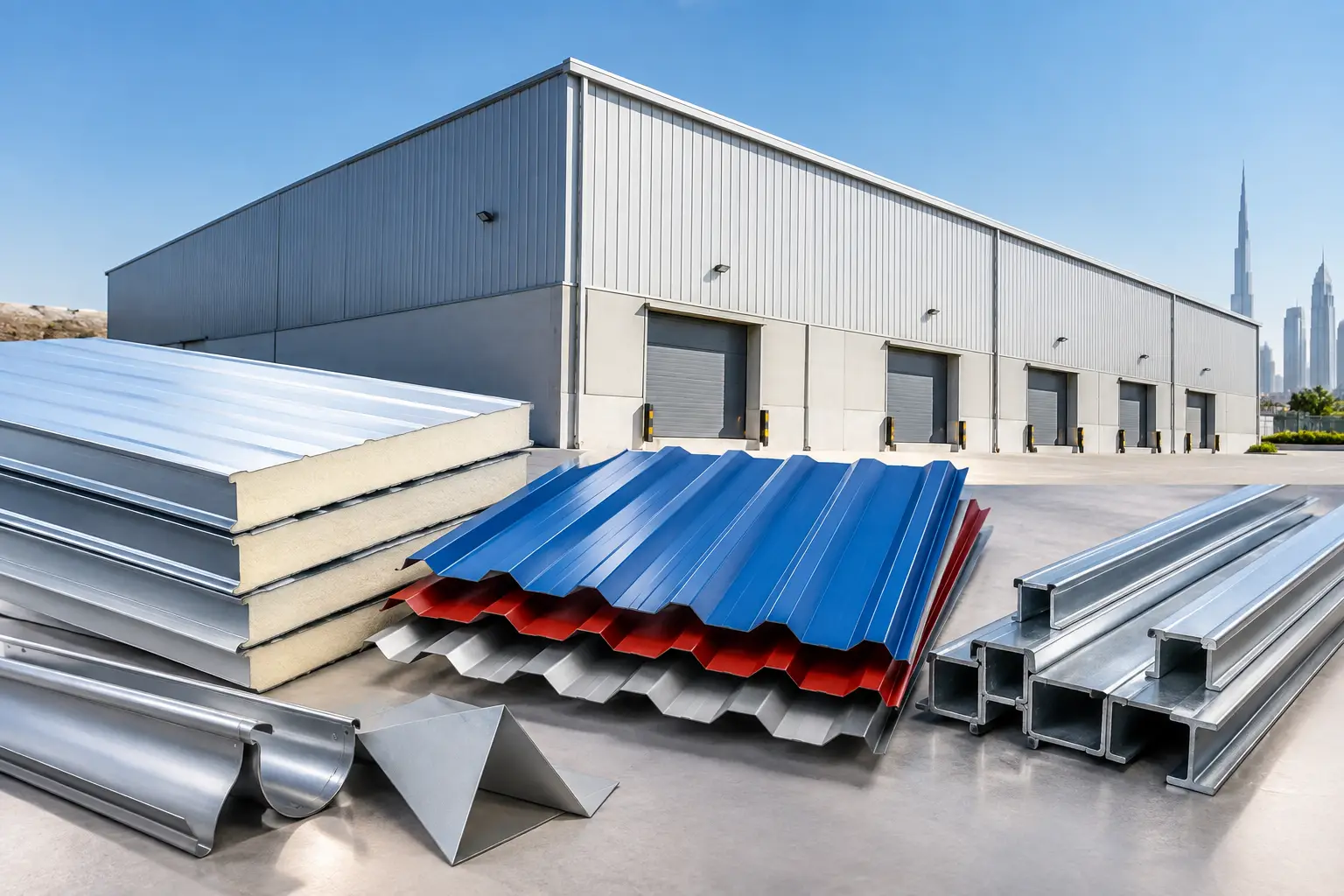
A warehouse roof is not simply a cover over a steel frame. It affects internal temperature, operating costs, maintenance access, stock protection, and the long-term condition of the building. The best roofing sheets for warehouses depend on the facility’s use, location, roof design, insulation needs, and exposure to heat, dust, humidity, or coastal conditions.
For warehouse owners, contractors, and project managers, the right decision is rarely about choosing the lowest sheet price. A low initial material cost can be offset by inadequate insulation, premature coating deterioration, poor drainage detailing, or extra maintenance over the life of the building. The practical approach is to select a complete roofing system that fits the project requirements from the start.
What a Warehouse Roof Needs to Deliver
Warehouse roofing must handle several demands at once. It needs to protect the building from sun, wind-driven rain, dust, and moisture while working with the structural steel frame, purlins, gutters, flashings, and ventilation strategy. In the UAE, solar heat gain and high outdoor temperatures are often major considerations, particularly for facilities with staff, temperature-sensitive materials, machinery, or frequent loading activity.
The intended use of the warehouse should lead the specification. A general storage facility may require a different roof solution from a food distribution center, production unit, logistics hub, workshop, or cold storage building. Where controlled internal temperatures are needed, insulation performance becomes a primary requirement. Where a building is open or naturally ventilated, a well-profiled single-skin metal roof may be more appropriate when paired with the right supporting design.
Roof geometry also matters. Sheet length, roof slope, purlin spacing, drainage direction, penetrations, and expansion joints all influence the type of sheet and accessories required. A good material selection can still underperform if these details are not coordinated before installation.
Best Roofing Sheets for Warehouses: Main Options
The most suitable warehouse roofing sheet is usually either an insulated sandwich panel or a profiled single-skin metal sheet. Both can be effective, but they serve different project needs.
PU and PIR insulated sandwich panels
Insulated sandwich panels combine external metal skins with an insulating core. For warehouses that need better indoor temperature control, these panels are often the practical choice. They provide a finished roof surface and insulation in one coordinated component, which can simplify the roof build-up compared with assembling separate layers on site.
PU and PIR insulated panels are commonly considered for warehouses, factories, prefabricated buildings, and temperature-sensitive facilities. The appropriate core type and panel thickness should be selected according to the project’s thermal target, building use, fire requirements, and the consultant’s specification. PIR panels are often specified where enhanced fire-related performance is required, but the final selection should always align with the approved project requirements and applicable local regulations.
Insulated panels can also help create a more consistent internal environment. This is valuable for warehouses storing packaging, electronics, food-related goods, pharmaceutical supplies, or materials affected by excessive heat. However, panels are not a substitute for proper HVAC design, ventilation, or airtight detailing where those are needed.
Profiled single-skin metal roofing sheets
Profiled single-skin sheets are a practical option for many industrial and general-purpose warehouses. Manufactured from coated steel, these sheets are lightweight, efficient to install, and compatible with steel structures and purlin systems. Their formed profile adds stiffness and channels rainwater toward the gutter line.
This option is often suitable where the building does not need a highly insulated envelope, or where insulation is planned as a separate layer within a larger roof assembly. Sheet profile, metal thickness, coating type, and fastening arrangement should be selected around the structural design and the local exposure conditions.
Single-skin roofing requires careful attention to condensation risk. If warm, humid air meets a cooler metal surface, moisture may form beneath the roof under certain operating conditions. This is particularly relevant for warehouses with changing internal temperatures or high humidity. An appropriate insulation and vapor-control strategy should be reviewed during design rather than added after the roof is installed.
Coated steel sheets for demanding environments
The coating on a roofing sheet has a major role in appearance, corrosion resistance, and service life. PPGI and PPAL coated sheets are widely used for roofing and wall cladding applications because they offer a finished colored surface and are available in profiles suited to industrial construction.
For projects near coastal areas, industrial zones, or locations exposed to high humidity and airborne contaminants, coating selection deserves additional scrutiny. The correct coating system depends on the site environment, expected maintenance approach, and specification. Choosing the right substrate and coating is more useful than selecting a color based only on appearance.
Galvanized steel sheets may also be used in suitable roofing and fabrication applications. As with all sheet materials, the project team should confirm the required corrosion protection, thickness, profile, and compatibility with adjacent materials.
Select the Sheet Around the Building, Not Just the Budget
A warehouse roofing sheet should be selected as part of the whole roof system. The following questions help move the discussion beyond price per square foot.
First, consider internal conditions. Does the facility need to remain cooler during working hours? Will it store temperature-sensitive goods? Is it a cold room, cold store, or conventional dry warehouse? These answers indicate whether insulated sandwich panels should be prioritized over a basic single-skin roof.
Second, assess the external environment. A warehouse in a coastal location may face different corrosion considerations from a building in an inland industrial area. Wind exposure, dust accumulation, rainfall patterns, and direct solar exposure also affect the roof design and material choice.
Third, confirm the structural arrangement. Roofing sheets must work with the designed purlin spacing, roof slope, support conditions, and anticipated loads. Longer spans, roof openings, solar equipment, maintenance access, and suspended services can change the design requirements. The structural engineer and roofing contractor should confirm that the sheet profile and fixing pattern suit the project.
Finally, consider the life-cycle view. A roof that reduces heat transfer, limits maintenance needs, and protects stored goods may offer better value than a lower-cost alternative that requires frequent repair or upgrades. This does not mean every warehouse needs the most complex system. It means the specification should match the operational value of the building.
Details That Protect Roofing Performance
Roofing sheets work best when the supporting details are properly planned. Flashings, ridge caps, closures, sealants, gutters, and fasteners are not minor additions. They control water movement, close gaps at junctions, and help maintain a clean finished roof line.
Gutters must be sized and positioned to carry water away efficiently. Roof penetrations for pipes, ducts, skylights, or equipment need properly formed flashings and compatible sealing details. Improvised cutting and sealing on site can create weak points, particularly where water can collect around openings.
Fastener selection also matters. The roofing contractor should use compatible fasteners and washers suited to the sheet type and supporting structure. Over-tightened fasteners may damage the sheet surface or washer, while under-tightened fasteners can compromise weather resistance. Installation quality is therefore as important as the material itself.
For insulated panel roofs, correct panel alignment and joint sealing are essential. For single-skin roofs, overlap direction, side laps, end laps, and roof pitch need to be coordinated to manage water effectively. These details should be clear in the project drawings and method of installation before work begins.
Practical Procurement for Warehouse Projects
Procurement should start with a clear schedule of requirements: roof area, panel or sheet profile, thickness, coating, color, insulation core where applicable, accessories, and expected delivery sequence. Ordering sheets without confirming flashings, ridge caps, gutters, and closures can lead to mismatched details or delays during installation.
It is also useful to request material information that matches the project specification and to review it with the contractor or consultant before placing the final order. This is especially important for insulated panels, fire-related requirements, and projects with demanding environmental exposure.
MetalSpan Trading FZE LLC supplies roofing sheets, insulated sandwich panels, galvanized and coated steel sheets, purlins, gutters, flashings, ridge caps, and related accessories for warehouse and industrial projects across the UAE. Coordinating these materials through a knowledgeable supplier can help contractors align the roof system with the project schedule and required details.
The best choice is the one that serves the warehouse long after handover. Start with the building’s operating needs, confirm the structural and environmental requirements, and specify every roof detail that keeps water, heat, and maintenance issues under control.